
- Share
-

-


Trustworthy, reliable, and knowledgeable are the three words that come to mind when describing OneMetric. It has been a pleasure working with them to increase our utilization of HubSpot, and we are gradually seeing the results. We appreciate their readiness to help, deep expertise in the HubSpot platform, and dedication to achieving our goals.

The Context: Operational Rigor Without a Connected Funnel
Westernacher Consulting is a global SAP and business consulting firm serving enterprise clients across Europe, Asia, and the Americas. As their marketing matured, their execution model became increasingly fragmented. The team was running webinars, launching gated content, and nurturing leads through email but none of it was connected in a way that enabled scalable execution or measurable attribution.
Their CRM contained dozens of isolated workflows and overlapping assets, each built for a specific campaign or asset type. Campaigns were performing, but no one could say which ones were driving revenue or accelerating pipeline.
The marketing team needed a way to consolidate effort, improve visibility, and bring structured insights back into both campaign planning and sales engagement. And that’s why they brought us(OneMetric) in to revamp the whole system.
High Marketing Activity, Low Signal Clarity
1. Fragmented Execution and Workflow Overload
Westernacher’s campaigns were supported by over 150 content-specific forms and more than 120 automation workflows. Every new campaign required its own form, list, and follow-up path resulting in constant duplication and difficult-to-maintain logic across HubSpot.
This slowed down launches, created inefficiencies in reporting, and made optimization difficult. Even simple changes required multiple workflow updates, which added operational friction and increased the risk of inconsistency across channels.
2. CRM Hygiene and Data Integrity
The contact database had significant duplication and data quality issues. Bounce rates had reached 3.8%, making deliverability unpredictable and hurting campaign effectiveness. Many records lacked proper associations between contacts, companies, and deals, which made both segmentation and reporting unreliable.
Without structured lifecycle stages or validated email entries, nurture campaigns struggled to convert. Teams lacked confidence in the lists they were using, and email engagement remained low despite strong content.
3. Siloed Visibility Between Marketing and Sales
Leads generated by webinars, whitepapers, and outbound campaigns were not tied to structured scoring models or behavioral signals. Marketing had limited insight into how leads moved through the funnel. Sales had no visibility into what content each lead engaged with, which pages they visited, or whether they were showing any buying signals.
This disconnect made it difficult to prioritize follow-ups, measure marketing contribution to pipeline, or forecast outcomes based on intent. Sales and marketing were operating in parallel — but not in sync.
What We Built: A Connected, Scalable Marketing System Inside HubSpot
1. Consolidated Workflow Architecture
We replaced more than 150 individual whitepaper forms with a single dynamic content form that adapts to different campaign assets. Instead of building new follow-ups for every asset, we created one segmented nurturing engine that responds to content type, lifecycle stage, and behavior.
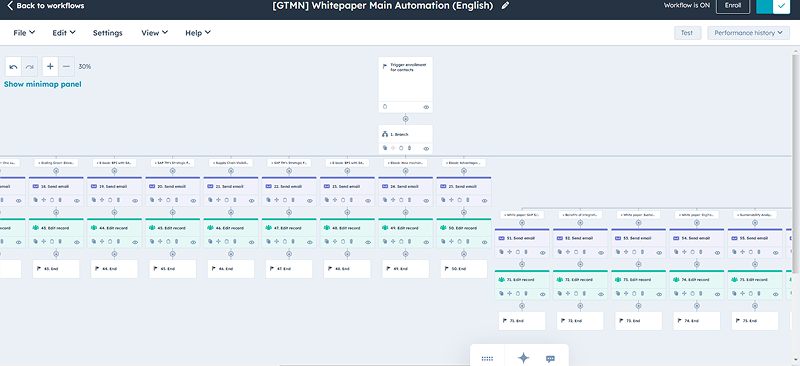
With centralized logic, the marketing team could now launch gated content or events without needing to clone assets or rebuild flows. Execution became consistent, fast, and easy to scale across regions and teams.
2. CRM Cleanup and Lead Structure
A full contact audit was completed to remove duplicates and rebuild record associations. Email verification protocols were implemented, reducing bounce rate from 3.8% to 0.85%. We introduced a structured record model where every contact was linked to companies and deals, with lifecycle stages accurately mapped.
Clean data unlocked the ability to segment leads properly, route them into the right nurtures, and build reports that reflected actual marketing impact. Email performance improved dramatically, and campaign lists became more reliable.
3. Intent-Based Scoring and Lead Visibility
We introduced a three-tiered scoring model (High, Medium, Low) based on behavior signals such as webinar attendance, whitepaper engagement, and email interaction. Every lead was also mapped to a service category based on their content preferences and campaign journey.
This gave sales immediate access to lead context inside HubSpot — including engagement history, scoring tier, and content activity — enabling more targeted and better-timed follow-ups. It also created a clear qualification path for marketing to hand off leads into pipeline.
4. Scalable Webinar Campaign Infrastructure
The webinar process was rebuilt from the ground up. We implemented an end-to-end campaign flow inside HubSpot, from registration through reminders to follow-up sequences. Attendance tracking and content interaction were logged back to the contact record for scoring and segmentation.
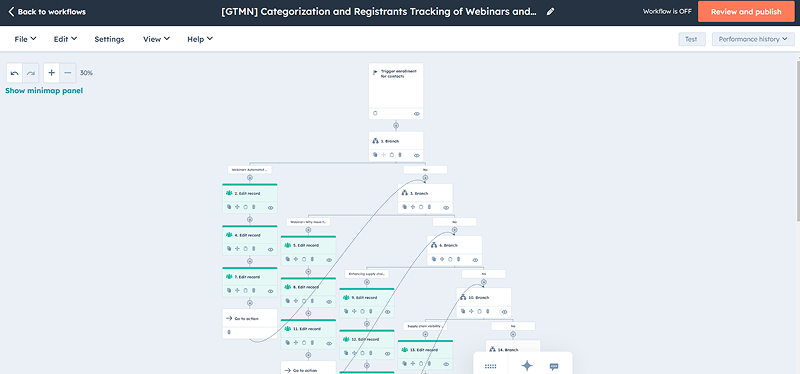
Marketing no longer had to manually manage webinar communications or patch together engagement lists. The system handled it all — automatically identifying who attended, who needed follow-up, and which sessions performed best.
The Business Results
- Email open rate increased by 934.6%
- Total email clicks increased by 189.6%
- Webinar registrations grew by 200%
- Whitepaper form submission conversion rate reached 18.91%
- New visitor sessions rose by 6.79%, and returning sessions by 13.06%
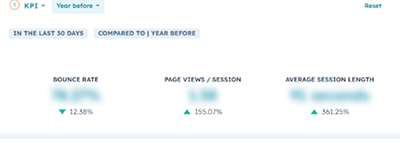
- Bounce rate dropped by 12.38%, while pages per session increased by 155.07%
- Average session duration grew by 361.25%
Westernacher didn’t change tools. They changed how their tools worked together.
If your team is also spending too much time managing forms, workflows, and reporting and too little time improving what actually converts – we should talk.