











HubSpot to HubSpot Migration: Move Your CRM Without Losing Business Context
Moving from one HubSpot portal to another should be more than copying records. Whether you're consolidating accounts, restructuring business units, or moving to a new HubSpot environment, your data, relationships, workflows, and reporting need a migration strategy built around your business.
OneMetric helps you migrate between HubSpot account (also called a portal) with structured data mapping, portal configuration, workflow assessment, and validation, so your team can transition to the right CRM environment with confidence.
Why Are You Moving Between HubSpot Portals?
As businesses grow, CRM needs evolve. Multiple accounts, acquisitions, and changing processes can create fragmented data and complex portal management.
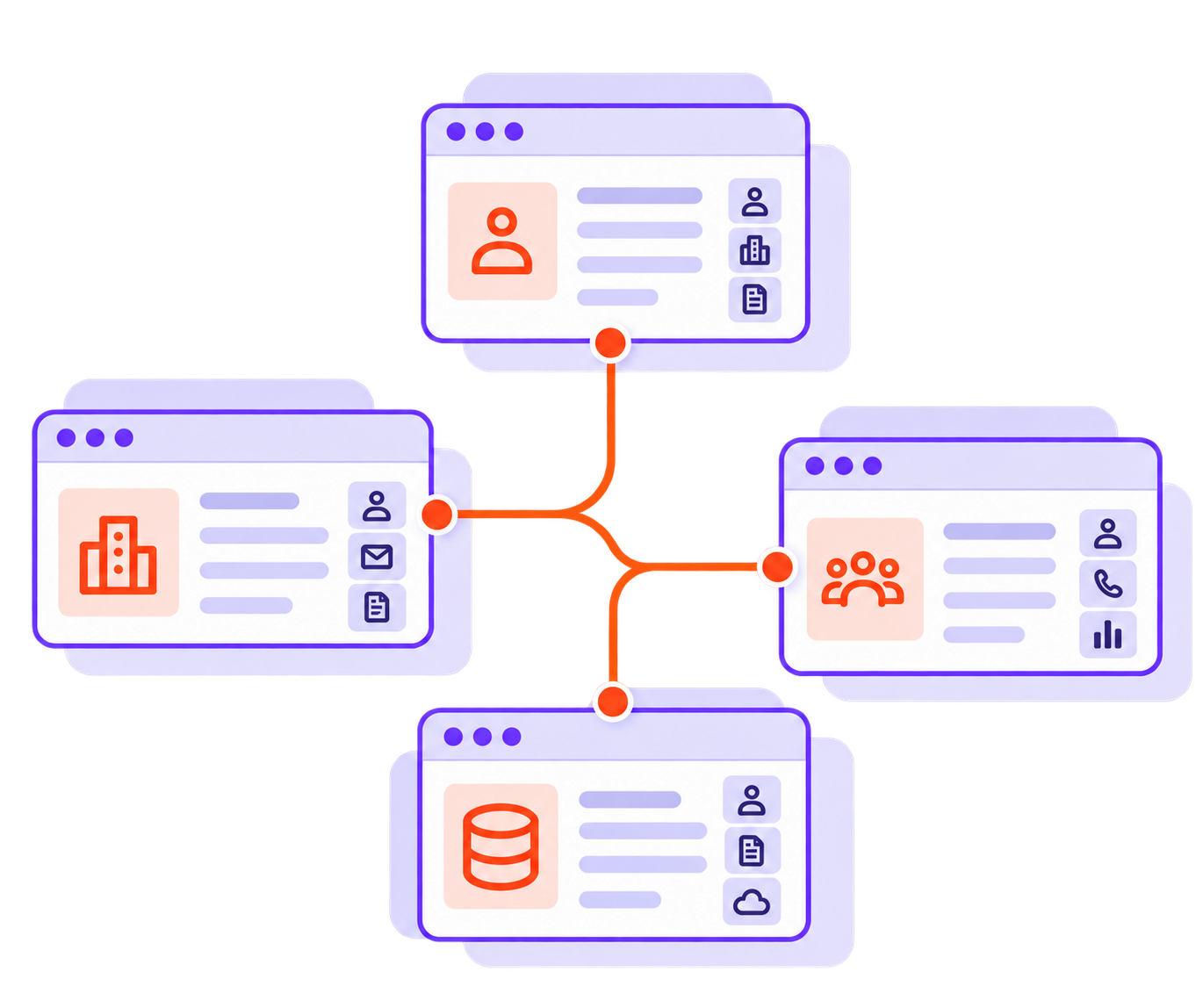
Multiple HubSpot Accounts
Different teams or regions operate separate portals, fragmenting customer data and processes.
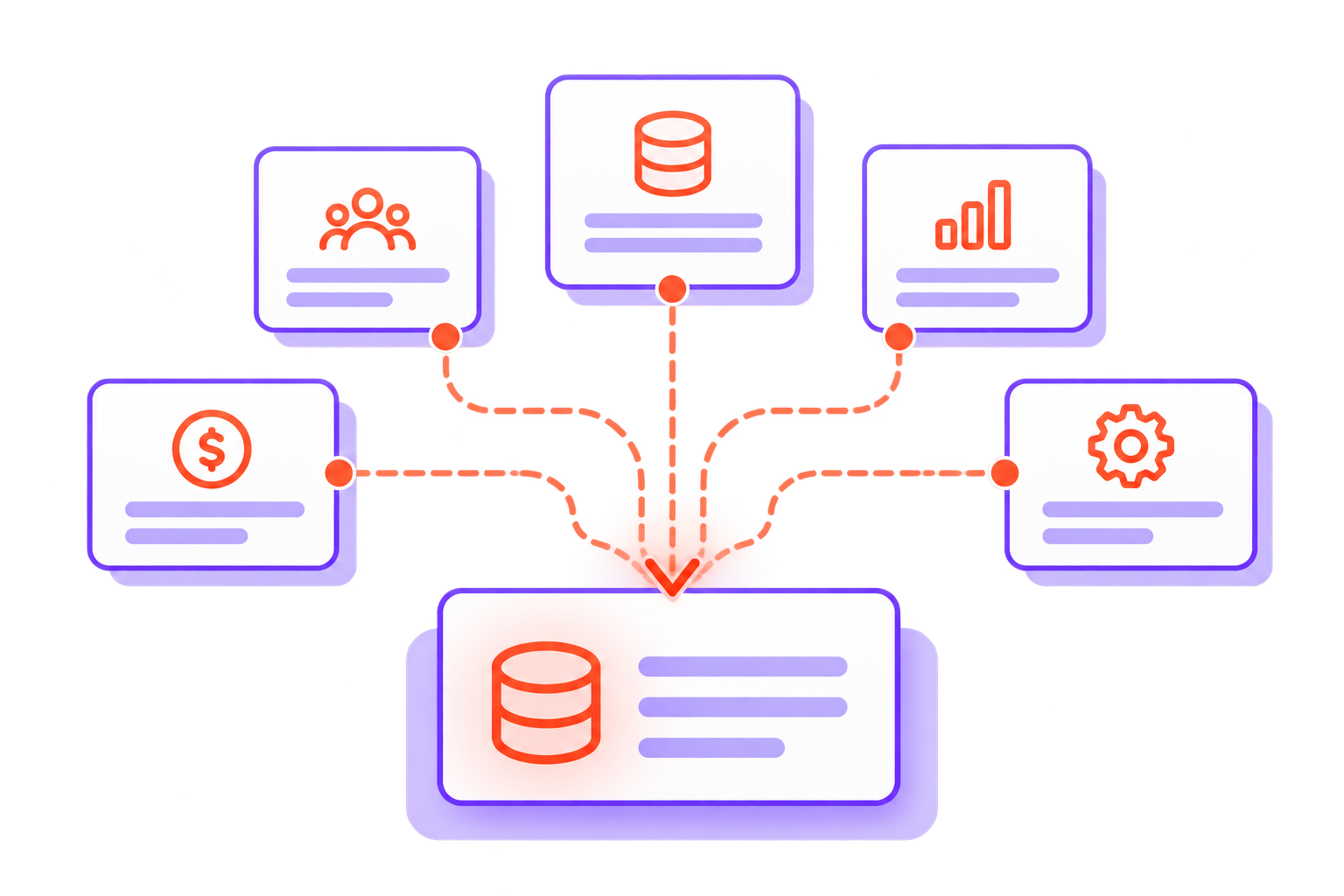
Mergers & Acquisitions
Combining accounts requires careful handling of duplicate records, ownership, associations, and workflows.
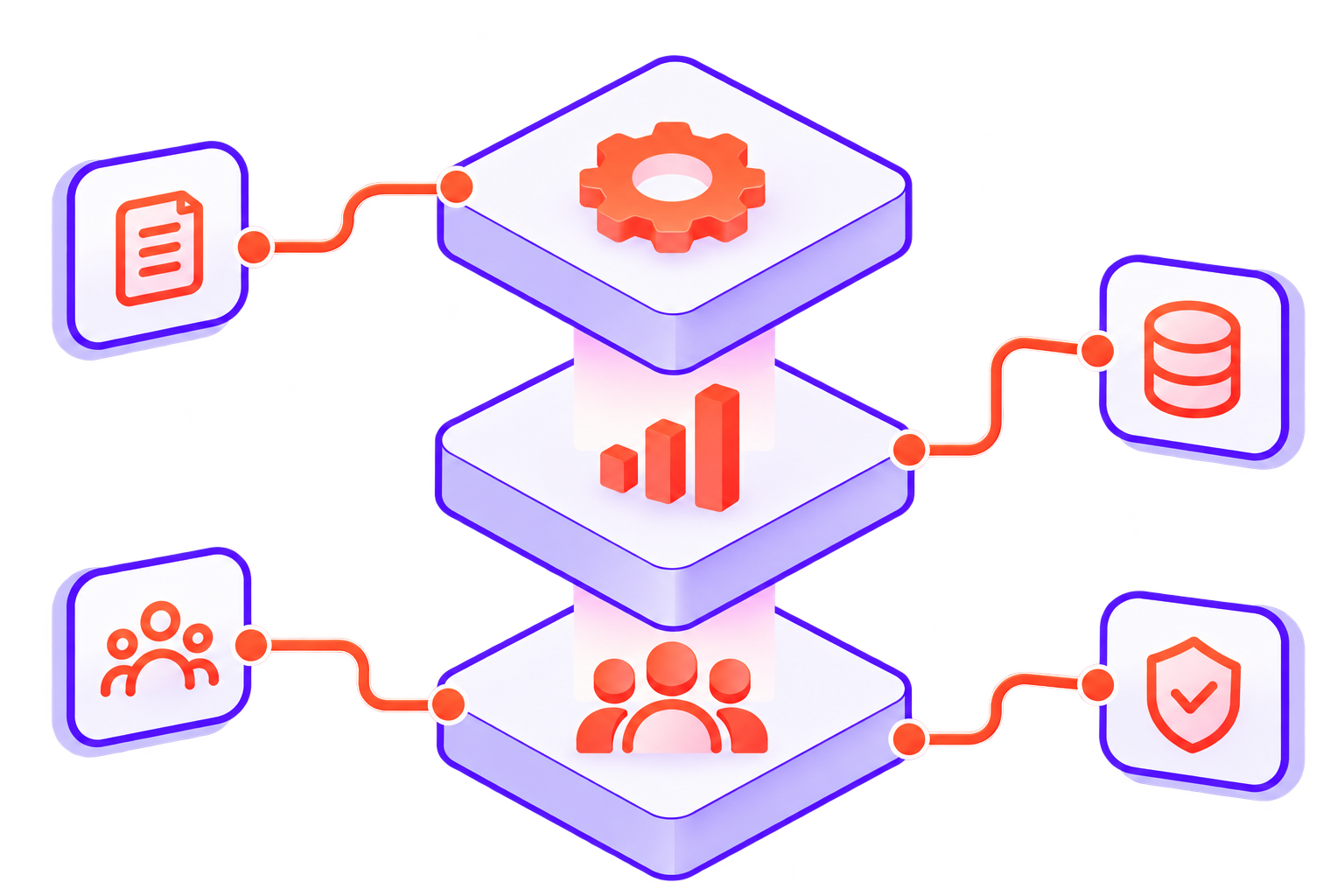
Evolving Business Requirements
New business needs may require changes to objects, properties, pipelines, and access controls.
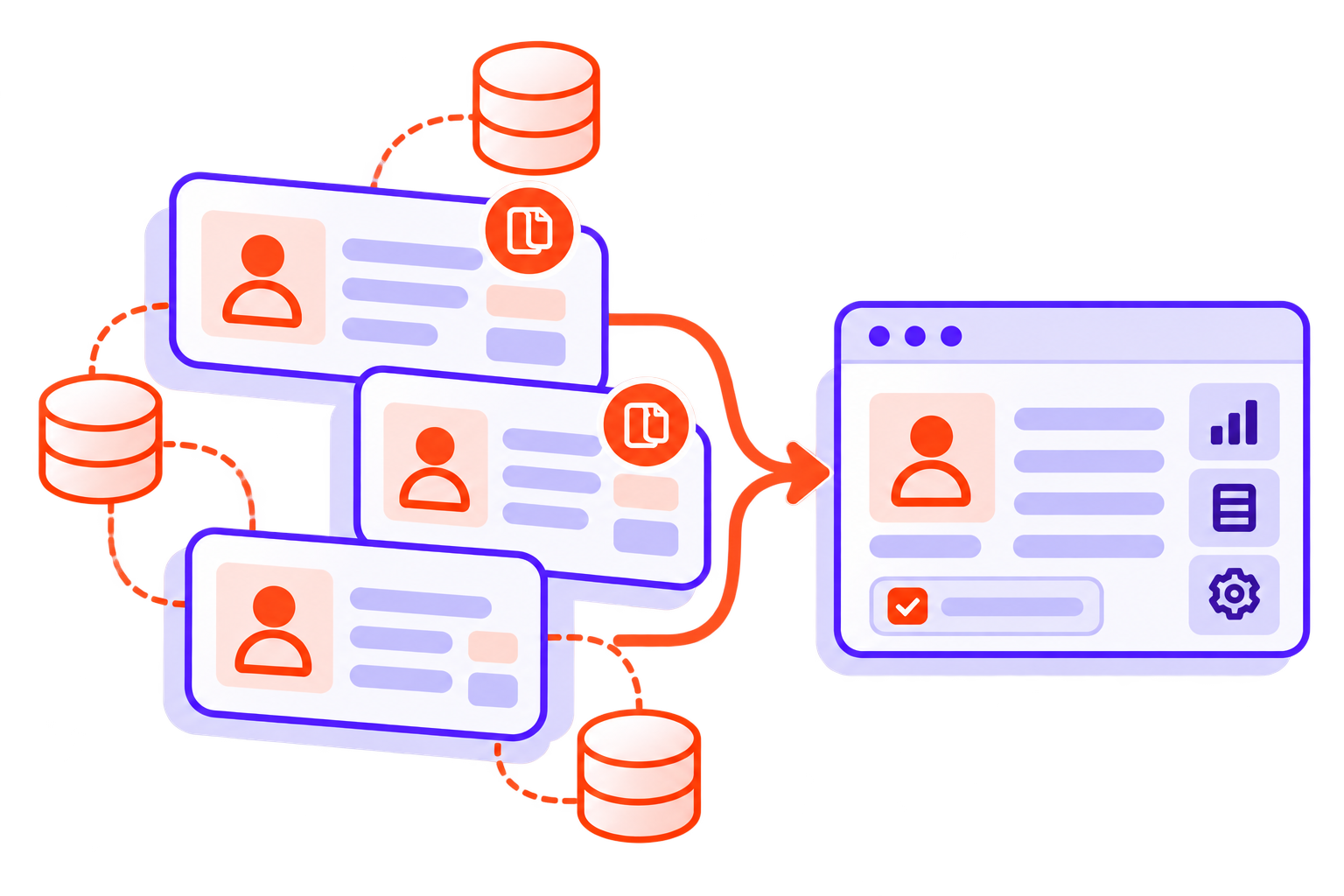
Duplicated Data & CRM Complexity
Redundant records, unused properties, and overlapping workflows complicate portal consolidation.
See How Businesses Build Better with OneMetric
From HubSpot website development to digital experiences, explore how we help businesses create high-performing websites and drive growth.
-
TravelWhen Growth Outpaced Ski ArmadilloSki Armadillo is a premium chalet operator based in Switzerland. They manage bookings across both B2C (direct guests) and B2B (referral partners and agencies). The team was lean and the brand was growing but the systems behind it weren’t keeping up.
-
Non-profitMigrating 1M Pardot and Salesforce Contacts to HubSpotOur client, OCEARCH is a non-profit organization on the forefront of tracking ocean life, driving conservation measures with their cutting-edge technology.
-
B2b saasThe Bigger the Deal, the More Structure You NeedFendahl builds enterprise-grade software for the global commodities market. An industry where deals are complex, consultative, and slow-moving. Their average sales cycle runs over 6 months, and each deal is worth well into 6 figures. It’s a process that rewards persistence, timing, and flawless coordination across teams.
-
B2b saasUnifying sales, marketing & onboarding for an AI platformWe started by taking a close look at the client’s existing tools and systems. The aim was to understand not just what they were using, but how each tool was helping or holding back their daily work. This gave us a clear picture of where the gaps were and how those gaps were affecting collaboration between teams.
-
Business consultingHow OneMetric Helped a Growth Marketing Agency in Migrating Its Client from Zoho CRM to HubSpotOneMetric helped a growth marketing agency move its client’s CRM from Zoho to HubSpot, migrating 2,300 unique contacts, 2,000 companies and approximately 150 deals, with their associations and engagement history preserved.
What Our Clients Say
-
Transition of Power
“ My team and I had gone to market to replace our existing CRM where we were given the opportunity to work with the Growtomation team. With any big transition, there are a lot of concerns and hesitation for change. The team were able to silence all those concerns and help us with our peaceful transition over to HubSpot. They are responsive and curious to help us in our niche marketplace for ABM and other outbound cadences for GTM and identifying TAM. Highly recommend! ”
Services provided
CRM Implementation, Account based marketing, Email Marketing, and Knowledge Base Development

Barnett, J. -
Outstanding Support from Aashish & OneMetric Team
“ We at Mechon International had an excellent experience working with OneMetric. Aashish supported us from start to finish, managing the migration, fixing form and tracking issues, and ensuring clean data setup. His communication was always clear, timely, and solution-focused. We truly appreciate his dedication and highly recommend OneMetric for any HubSpot implementation. ”
Services provided
Paid Advertising, Sales and Marketing Alignment, CRM Implementation, Social Media, and Email Marketing
k, T. -
Professional, great communicators, commercially minded and quick to deliver
“ I have worked with a few HubSpot partners who promised the world and but delivered very little or when they delivered it took twice the amount of time originally agreed on. I found the team at Growtomation really easy to deal with. What I like best is the fact that there is no ticketing system for support. I can reach out to my dedicated project manager and move tasks priorities at will. I can upload tasks to our Growtomation dashboard and when urgent deadlines have come up the team at Growtomation has been quick, willing and able to help me deliver them. Growtomation conducts themselves professionally even when under pressure and are able to juggle multiple projects successfully with competing deadlines. The technical support they have provided on fully integrated marketing campaigns, platform integration and Salesforce CRM migration has been invaluable. ”
Services provided
Email Marketing, Full Inbound Marketing Services, Website Development, Account based marketing, Custom API Integrations, Sales Enablement, and Programmable Automation
Barreto-Tilman, M.
Get a HubSpot CRM Migration Estimate
Get a tailored migration estimate based on your data, workflows, integrations, and technical requirements.
One HubSpot Environment. A Better-Structured CRM.
A HubSpot-to-HubSpot migration creates an opportunity to consolidate data, standardize processes, and establish a more consistent CRM architecture.
Consolidate Customer Data
Bring contacts, companies, deals, tickets, and supported custom objects together in a more unified environment.
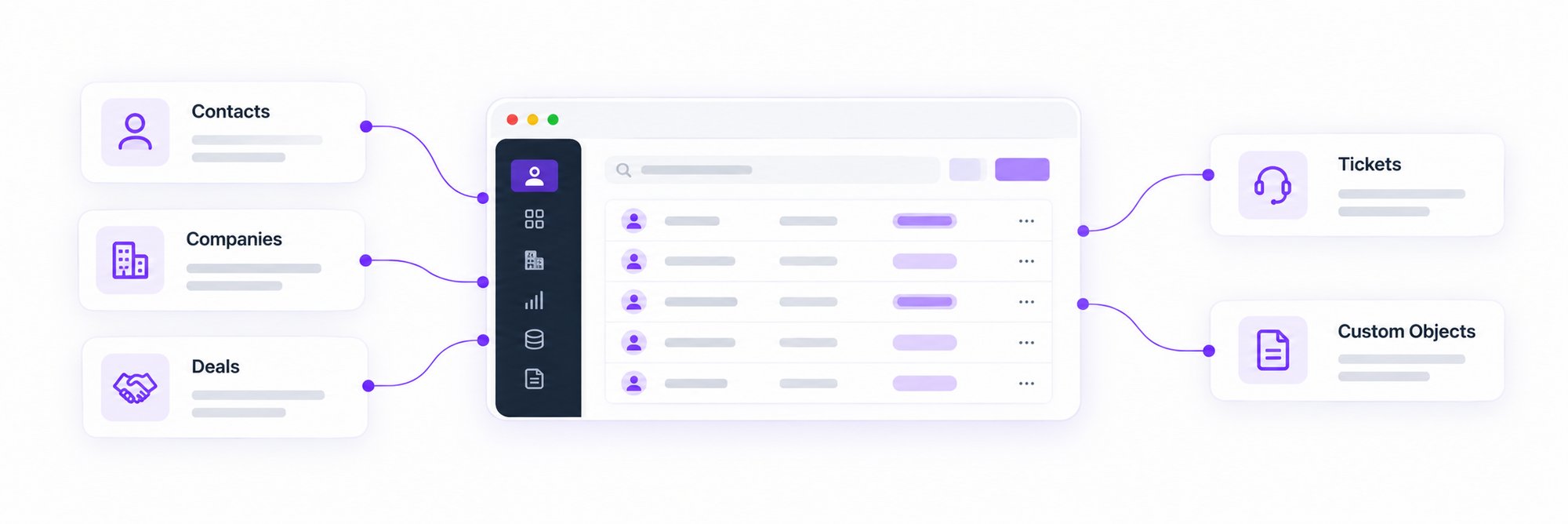
Standardize CRM Structure
Align properties, pipelines, record associations, lifecycle stages, and naming conventions across the destination portal.
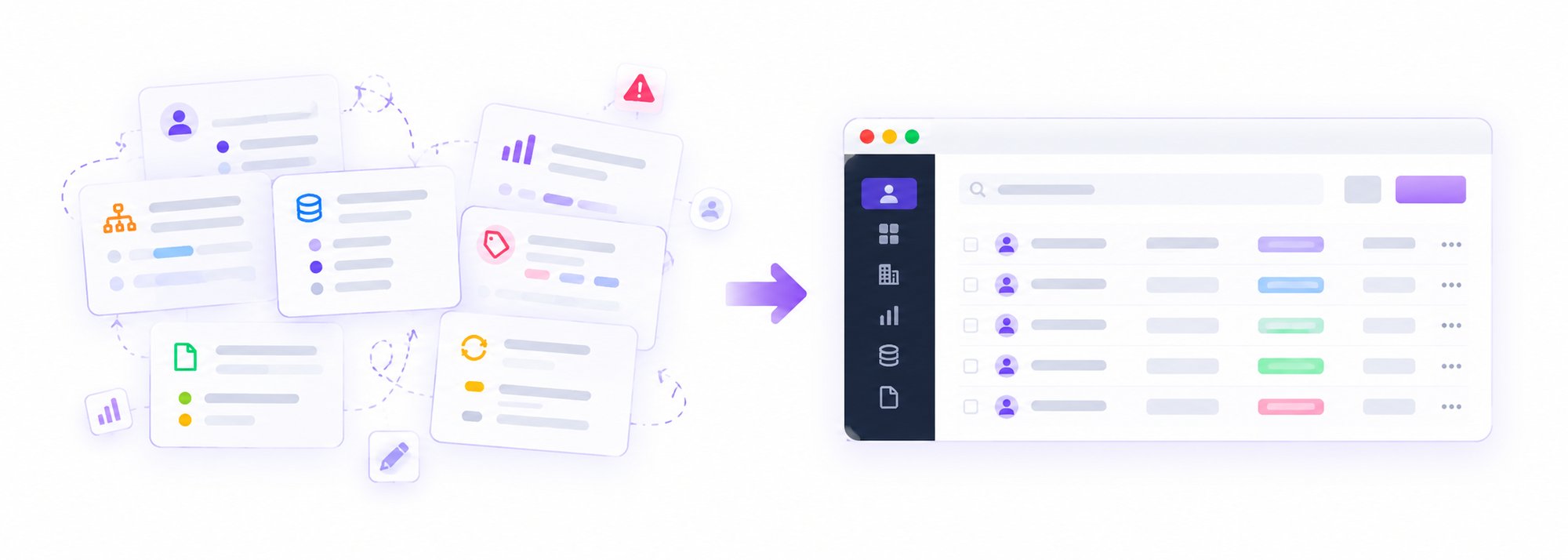
Reduce Operational Complexity
Identify redundant records, unnecessary properties, and overlapping workflows before moving them into the new environment.
Align Teams and Business Units
Create a more consistent approach to ownership, permissions, reporting, and processes across teams or brands.
Establish a Scalable HubSpot Foundation
Prepare the destination portal to support future growth, new teams, acquisitions, and evolving operational requirements.
HubSpot to HubSpot Migration: Map the Structure, Not Just the Data
Even when both systems use HubSpot, their configurations may differ. Properties, pipelines, custom objects, association labels, permissions, and workflows may not align between the source and destination portals.
Contacts and Companies
Map customer records, company information, custom properties, owners, and associations while identifying duplicate or conflicting records.
Deals and Pipelines
Assess deal properties, pipeline stages, ownership, currencies, and business rules before transferring records into the destination portal.
Tickets and Service Data
Review ticket pipelines, statuses, ownership, associated records, and service-related properties to ensure the destination environment supports existing processes.
Custom Objects and Associations
Identify custom object schemas, properties, association labels, and related records. Prepare the required destination structure before transferring the data.
Properties and Data Definitions
Compare property names, internal identifiers, field types, dropdown options, and required values to prevent mapping errors and inconsistent reporting.
Owners, Teams, and Permissions
Map source users and ownership requirements to the destination portal's users, teams, access controls, and operational structure.
Activities and Engagement History
Assess meetings, tasks, notes, calls, emails, and other supported engagement records, including their associations and migration limitations.
What Can Be Migrated Between HubSpot Portals?
Move critical CRM data and configurations with a migration plan tailored to your HubSpot portals, subscriptions, and business requirements.
CRM Records
Transfer contacts, companies, deals, tickets, and supported custom object records.
Properties and Associations
Map properties, field values, and record relationships to the destination portal.
Pipelines and Stages
Recreate deal and ticket pipelines, stages, and required settings.
Activities and Engagements
Transfer supported calls, meetings, tasks, notes, and engagement history.
Products and Line Items
Map product records, line items, and their supported deal associations.
Lists and Segments
Assess lists, segmentation logic, and marketing data for transfer or recreation.
Workflows and Automation
Identify workflows and automation that need rebuilding or reconfiguration.
Marketing Assets and Content
Assess forms, marketing emails, landing pages, website pages, blogs, and campaigns for migration or recreation.
Portal Configuration
Review supported settings, permissions, and dependencies before recreating configurations.
Assess Your HubSpot Migration Scope
Identify what can be migrated and what needs to be rebuilt between HubSpot portals.
HubSpot Portal Consolidation: What Should You Merge, Rebuild, or Retire?
Consolidate HubSpot portals by merging duplicate data, rebuilding essential configurations, and retiring outdated assets.
Merge Duplicate Data
Identify duplicate contacts, companies, and overlapping records. Resolve conflicting values and preserve important associations across portals.
Rebuild Essential Configurations
Adapt properties, pipelines, workflows, and association labels to align with the destination portal's requirements.
Retire Redundant Assets
Remove obsolete properties, unused workflows, outdated assets, and redundant configurations to simplify CRM management.
Workflow and Automation Migration Between HubSpot Portals
Identify workflow dependencies, enrollment triggers, properties, and connected assets to ensure a smooth migration between HubSpot portals.
Workflow Dependencies and Enrollment Criteria
Review enrollment triggers, suppression criteria, re-enrollment settings, and property dependencies before moving workflows.
Lifecycle and Lead Routing Automation
Assess lifecycle updates, lead assignment, notifications, and sales handoff logic to ensure the destination portal supports the intended processes.
Deal and Ticket Automation
Review stage-based automation, task creation, notifications, and other processes that depend on pipeline configuration.
Marketing Automation
Assess email automation, lists, forms, campaigns, and other assets that workflows depend on, verifying compatibility with the destination portal.
Workflow Testing and Re-Enrollment Controls
Test workflow behavior in the destination environment, including enrollment rules and actions, before enabling production automation.
HubSpot Integrations and Connected Systems
A HubSpot-to-HubSpot migration involves more than transferring CRM data. We assess connected applications,
integrations, APIs, and data flows to determine what needs to be reconnected, reconfigured, rebuilt, or retired in your destination portal.
How We Validate Your HubSpot to HubSpot Migration
We verify migrated data, relationships, workflows, and integrations to ensure your destination portal meets the agreed requirements.
Data Accuracy
Verify record counts, property values, ownership, required fields, and migration exceptions.
Relationships & Associations
Confirm contact-company links, deal associations, custom object relationships, and record connections.
Workflows & Pipelines
Test enrollment triggers, workflow actions, deal stages, assignments, and notifications.
Reporting & Segmentation
Validate reports, dashboards, lists, filters, and segmentation logic.
Integrations & Assets
Test data flows, connected applications, forms, and other critical assets.
Your CRM Data Stays Protected Throughout the Migration
Your HubSpot portal contains customer, sales, and business-critical information. We incorporate data protection, controlled access, and validation into the migration plan from discovery through go-live.
Secure Access Before Data Moves
Define access permissions, data ownership, backup responsibilities, and security requirements before migration begins.
Keep Data Transfers Controlled
Follow agreed transfer procedures and access controls while data moves between the source and destination portals.
Validate the Destination Environment
Test migrated records, relationships, and workflows while maintaining source portal access according to the transition plan.
Reconcile Data and Resolve Exceptions
Verify record counts, property values, associations, and critical workflows. Resolve discrepancies before approving the destination portal for launch.
Support a Controlled Transition
Monitor portal performance, resolve migration issues, and ensure critical workflows and integrations function as expected. Support teams through the transition.
The HubSpot to HubSpot Migration Roadmap: Audit. Map. Migrate. Launch.
Follow a structured migration process to assess data, map dependencies, transfer assets, validate results and launch with confidence.
01. Audit & Discovery
Portal Audit – Review source and destination portals, CRM records, properties, workflows, integrations, and assets.
Data Assessment – Identify duplicates, inconsistencies, data-quality issues, and migration dependencies.
Migration Scope – Define what gets merged, rebuilt, migrated, or retired.
02. Architecture & Preparation
Data Mapping – Map records, properties, associations, owners, and activities between portals.
Portal Setup – Configure objects, properties, pipelines, permissions, and required settings.
Clean & Pilot – Clean approved data and run a pilot migration to validate mappings and associations.
03. Migration & Validation
Data Migration – Transfer approved records and supported historical data using the appropriate migration method.
Workflow & Integration Rebuild – Reconfigure connected applications and recreate required workflows and business logic.
Validation & Reconciliation – Verify records, relationships, workflows, integrations, and reports.
04. Launch & Transition
Final Cutover – Complete the final migration and transition to the destination portal.
User Acceptance Testing – Validate key workflows, reports, and CRM processes with your team.
Enablement & Support – Train users, document the new setup, and resolve post-migration issues.
Ready to Move to a Better-Structured HubSpot Environment?
Whether you're consolidating portals, restructuring business units, or migrating to a new HubSpot account, OneMetric helps you plan a smooth transition.
Let's assess your existing portals, identify migration requirements and build a roadmap aligned with your business needs.
Why Choose OneMetric for HubSpot to HubSpot Migration?
A portal migration is an opportunity to create a more consistent, maintainable CRM environment. OneMetric combines migration planning,
data mapping, configuration assessment, and validation to help your business move between HubSpot portals with confidence.

HubSpot Elite Partner
Certified HubSpot Expertise
Expertise across CRM migrations, implementations, integrations, and RevOps, helping businesses transition to HubSpot with the right architecture and setup.
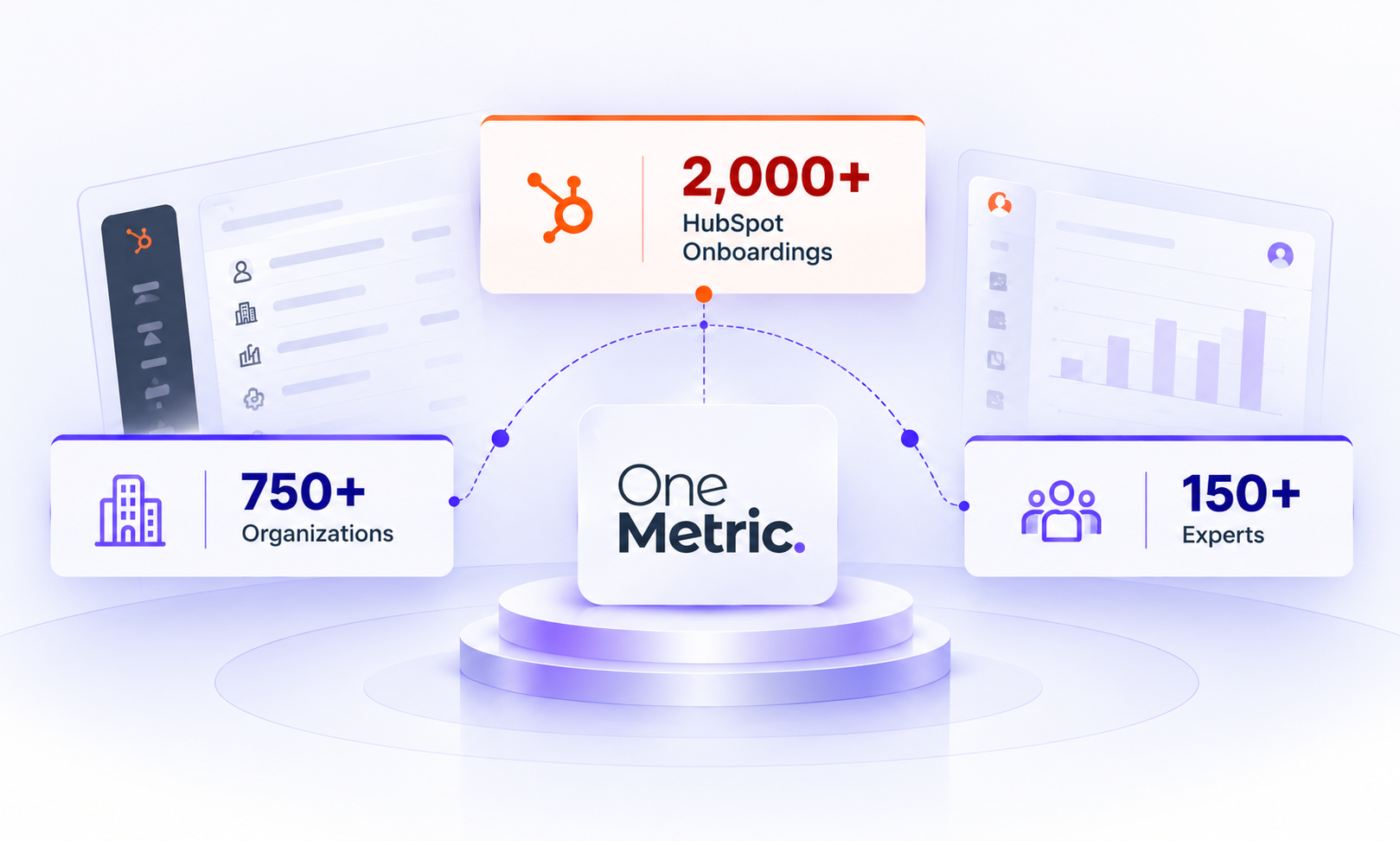
Proven at Scale
Experience That Scales With You
Trusted by 750+ organizations, powered by 2,000+ HubSpot onboardings, and backed by 150+ HubSpot and RevOps experts.
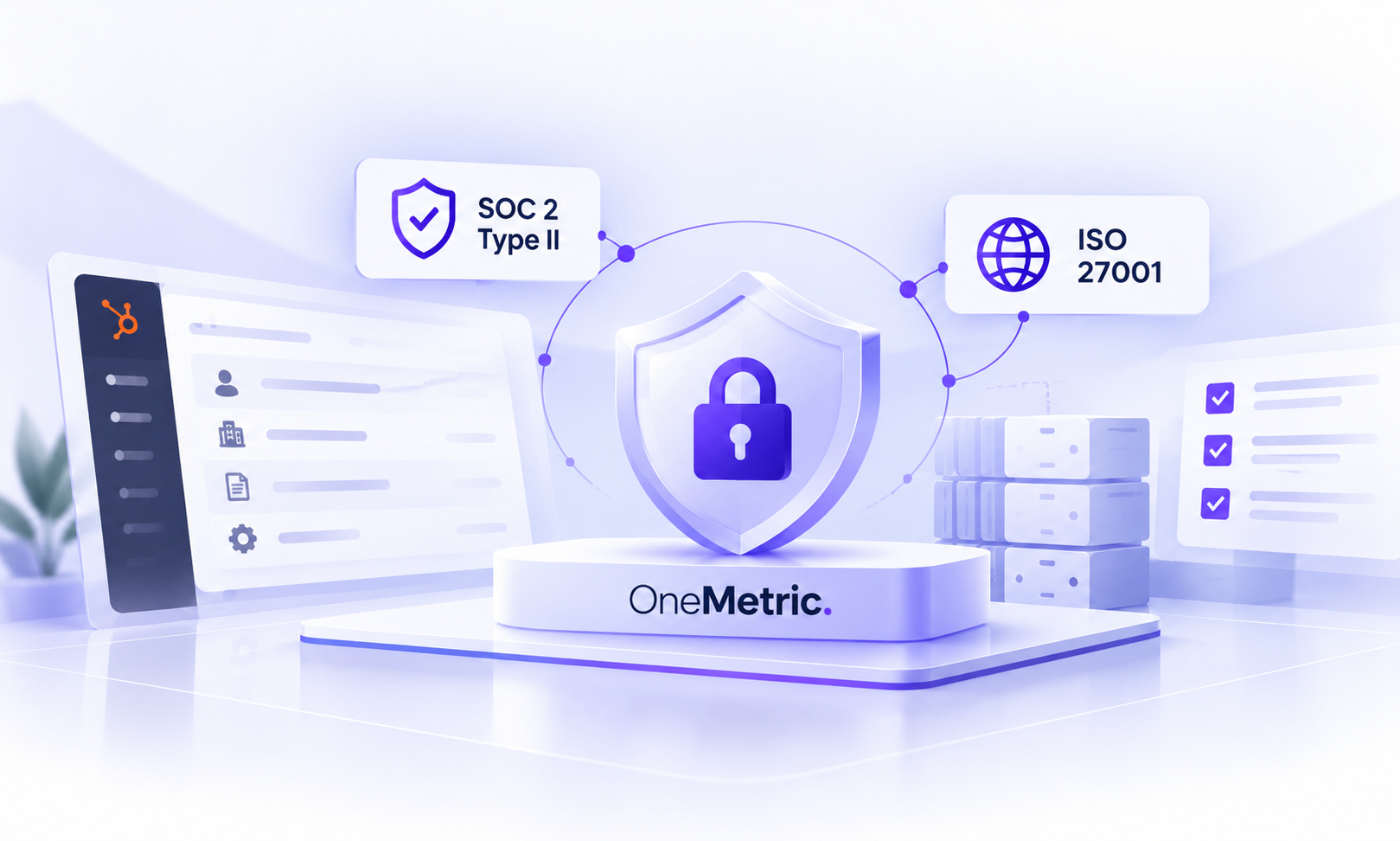
Enterprise Security
Security Built for Enterprise
SOC 2 Type II and ISO 27001 certified practices supporting secure, compliant, and reliable CRM migrations for enterprise environments.
Book a Meeting
Frequently Asked Questions About HubSpot to HubSpot Migration
HubSpot-to-HubSpot migration involves moving CRM data, configurations, and selected assets from one HubSpot portal to another. It can support account consolidation, organizational restructuring, acquisitions, or moving to a new CRM environment.
Common reasons include consolidating multiple portals, integrating acquired businesses, restructuring teams or brands, standardizing CRM processes, and establishing a more consistent data architecture.
Yes, portal consolidation is possible, but the approach depends on the records, configurations, and assets involved. The process requires mapping data, handling duplicates, preparing the destination portal, and validating the consolidated environment.
Depending on the migration method and configuration, supported data may include contacts, companies, deals, tickets, custom objects, properties, associations, activities, products, and other CRM records. Marketing assets and portal configurations require separate assessment.
Certain workflows can be copied using supported HubSpot account-management features or migration tools, subject to subscription and permission requirements. Dependencies such as properties, lists, forms, and connected assets must also be checked.
Contacts are matched by email address and companies by domain name when records are imported, so those duplicates are handled automatically. Records without an email or domain, and other object types, need matching rules that are defined in the migration plan.
Custom object schemas and records may be transferable through supported tools or migration methods. The destination portal must support the required object configuration, properties, and associations, and any subscription restrictions must be checked.
Report and dashboard migration depends on the specific assets and supported transfer method. Some may need to be recreated or reconfigured, particularly when properties, data definitions, permissions, or source records differ.
The timeline depends on record volume, duplicate handling, custom objects, workflow complexity, connected assets, and validation requirements. An assessment of both portals helps establish the expected scope and timeline.
Pricing depends on the number of portals, record volumes, data complexity, assets, custom objects, workflow requirements, and consolidation effort. OneMetric can estimate the work after reviewing your source and destination environments.
In many cases, the source portal can remain operational during preparation and testing. The final transition plan depends on data synchronization, ongoing changes, integration dependencies, and whether a final data freeze or synchronization is needed.
Start with a clear scope, prepare the destination schema, define duplicate-handling rules, test the migration, reconcile records and associations, validate workflows and integrations, and complete user acceptance testing before go-live.
Relatable? We should definitely talk.
All that we’ll cover when we speak:
- How to measure and multiply the ROI of your HubSpot investment
- How can you integrate systems to eliminate data silos and make HubSpot the Single source of truth for your GTM teams
- Your current GTM motions and future roadmap
- Challenges that you face with your HubSpot
- What would "wins" look like for you