










• Aramex
  • The Buzzlab
  • Admin Awards
  • Bain & Company
  • Humanz
  • CasperLabs
  • Terrapay
  • Over It
  • Automation Hero
  • Brikl

Has Your Salesforce CRM Become Harder to Manage Than It Should Be?

Salesforce can support complex business operations, but extensive
customization and disconnected processes can make your CRM harder to maintain as your business evolves.
1
CRM Architecture Network-1

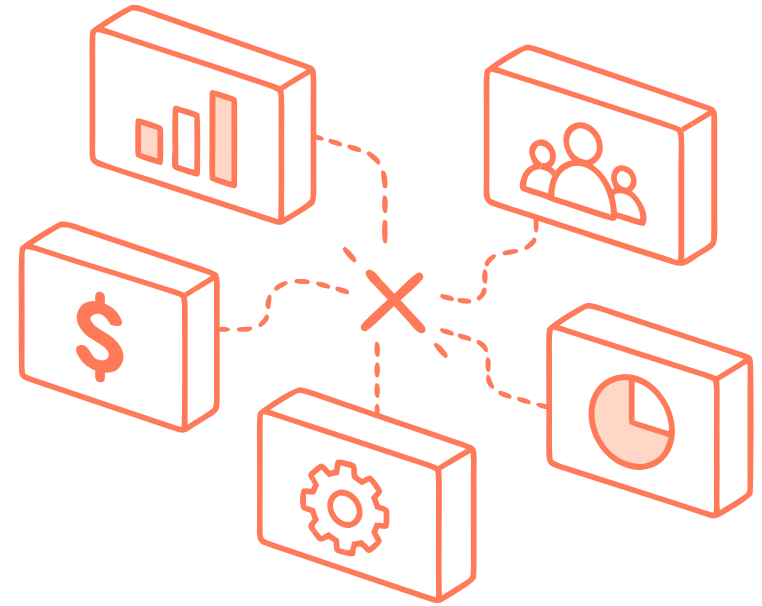
Complex CRM Architecture

Custom objects, fields, relationships, and legacy configurations can make changes difficult and increase implementation overhead.
2
Disconnected Revenue Operations-1

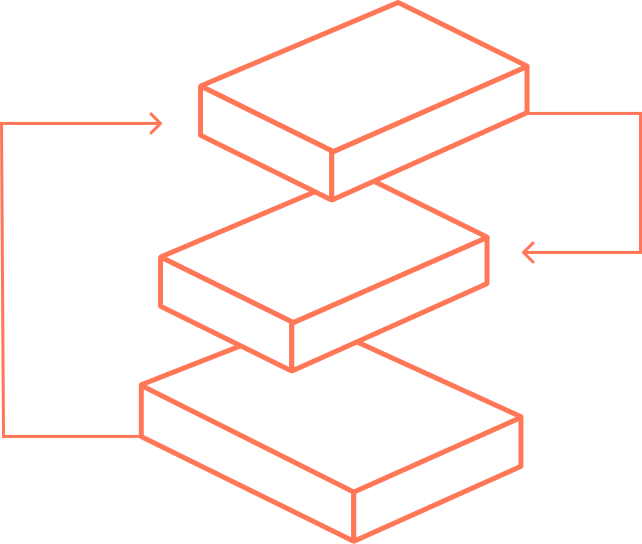
Disconnected Revenue Operations

Sales, marketing, and customer success teams may rely on separate systems, inconsistent lifecycle definitions, and fragmented customer data.
3
Process Complexity

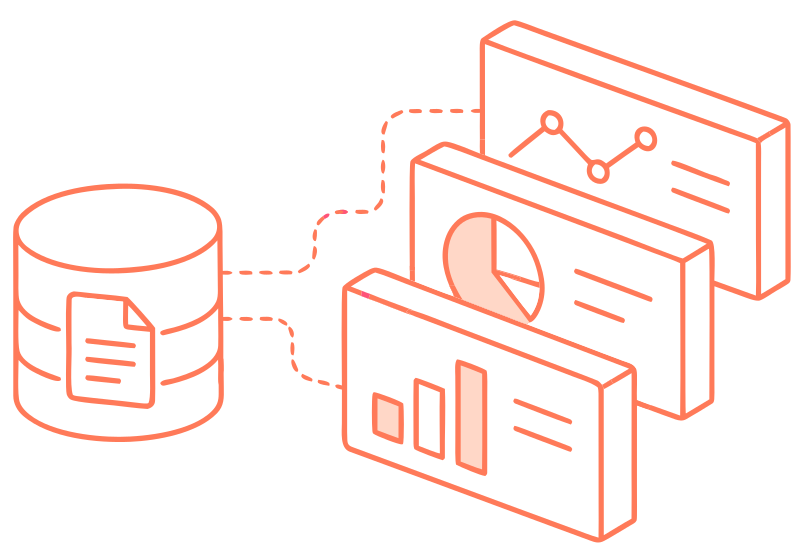
Workflows That Are Difficult to Maintain

Accumulated flows, legacy automation, validation rules, and custom logic can create dependencies that need careful assessment before migration.
4
Legacy Data Feeding Analytics Dashboards-1

Reporting That Depends on Legacy Data

Historical pipeline data, custom fields, ownership changes, and attribution requirements can complicate reporting continuity when the underlying CRM structure changes.

See How Businesses Build Better with OneMetric

From HubSpot website development to digital experiences, explore how we help businesses create high-performing websites and drive growth.

What Our Clients Say

  • Transition of Power

    “ My team and I had gone to market to replace our existing CRM where we were given the opportunity to work with the Growtomation team. With any big transition, there are a lot of concerns and hesitation for change. The team were able to silence all those concerns and help us with our peaceful transition over to HubSpot. They are responsive and curious to help us in our niche marketplace for ABM and other outbound cadences for GTM and identifying TAM. Highly recommend! ”

    Services provided
    CRM Implementation, Account based marketing, Email Marketing, and Knowledge Base Development

    Barnett, J.
    Barnett, J.
  • Outstanding Support from Aashish & OneMetric Team

    “ We at Mechon International had an excellent experience working with OneMetric. Aashish supported us from start to finish, managing the migration, fixing form and tracking issues, and ensuring clean data setup. His communication was always clear, timely, and solution-focused. We truly appreciate his dedication and highly recommend OneMetric for any HubSpot implementation. ”

    Services provided
    Paid Advertising, Sales and Marketing Alignment, CRM Implementation, Social Media, and Email Marketing
    k T
    k, T.
  • Professional, great communicators, commercially minded and quick to deliver

    “ I have worked with a few HubSpot partners who promised the world and but delivered very little or when they delivered it took twice the amount of time originally agreed on. I found the team at Growtomation really easy to deal with. What I like best is the fact that there is no ticketing system for support. I can reach out to my dedicated project manager and move tasks priorities at will. I can upload tasks to our Growtomation dashboard and when urgent deadlines have come up the team at Growtomation has been quick, willing and able to help me deliver them. Growtomation conducts themselves professionally even when under pressure and are able to juggle multiple projects successfully with competing deadlines. The technical support they have provided on fully integrated marketing campaigns, platform integration and Salesforce CRM migration has been invaluable. ”

    Services provided
    Email Marketing, Full Inbound Marketing Services, Website Development, Account based marketing, Custom API Integrations, Sales Enablement, and Programmable Automation
    Barreto Tilman
    Barreto-Tilman, M.

Get a Salesforce CRM Migration Estimate

 Get a tailored migration estimate based on your data, workflows, integrations, and technical requirements. 

Why Migrate from Salesforce to HubSpot?

The objective isn't simply to replace Salesforce. It's to create a CRM environment
that aligns your customer data, revenue processes, and reporting with your business priorities.

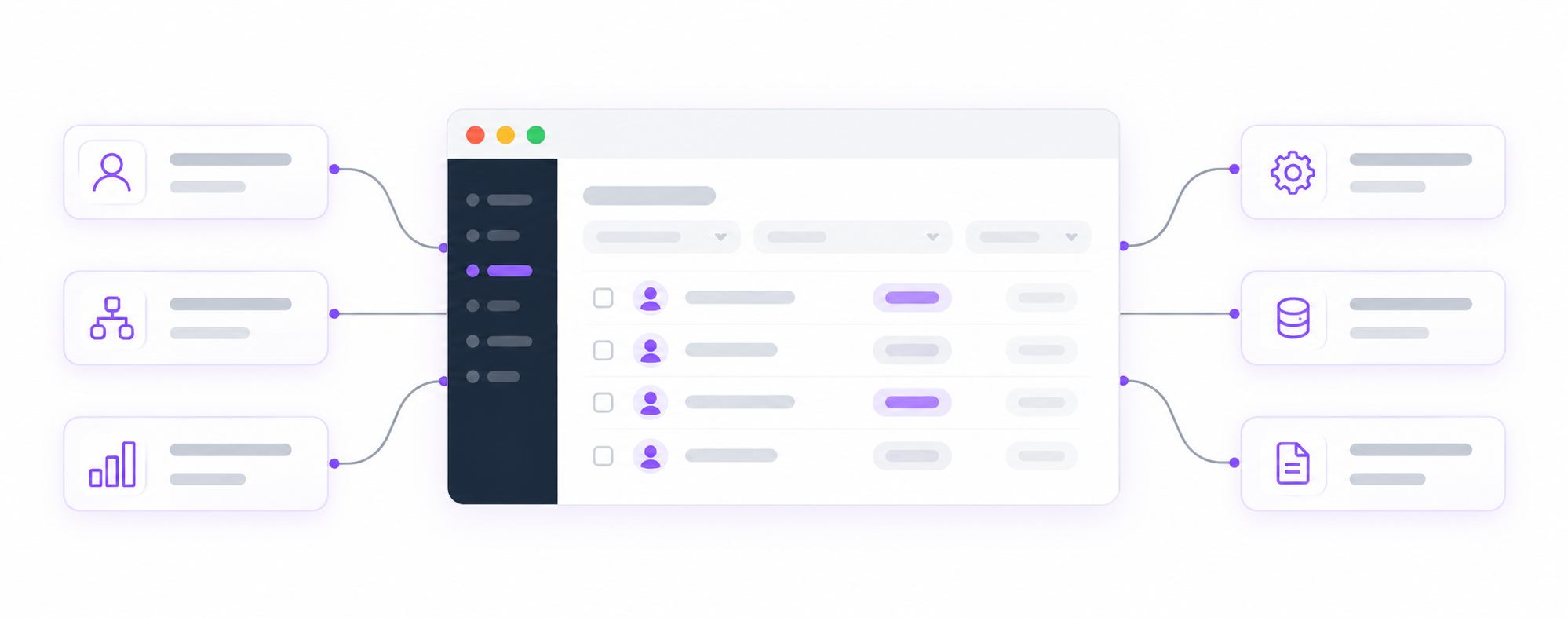
Bring Customer Data Into a More Connected CRM

Structure contacts, companies, deals, and engagement data to give teams a more consistent view of customer relationships.
Pastel Software Dashboard Connections

Simplify CRM Administration

Review legacy fields, redundant workflows, and unnecessary customization to create a more maintainable CRM architecture.
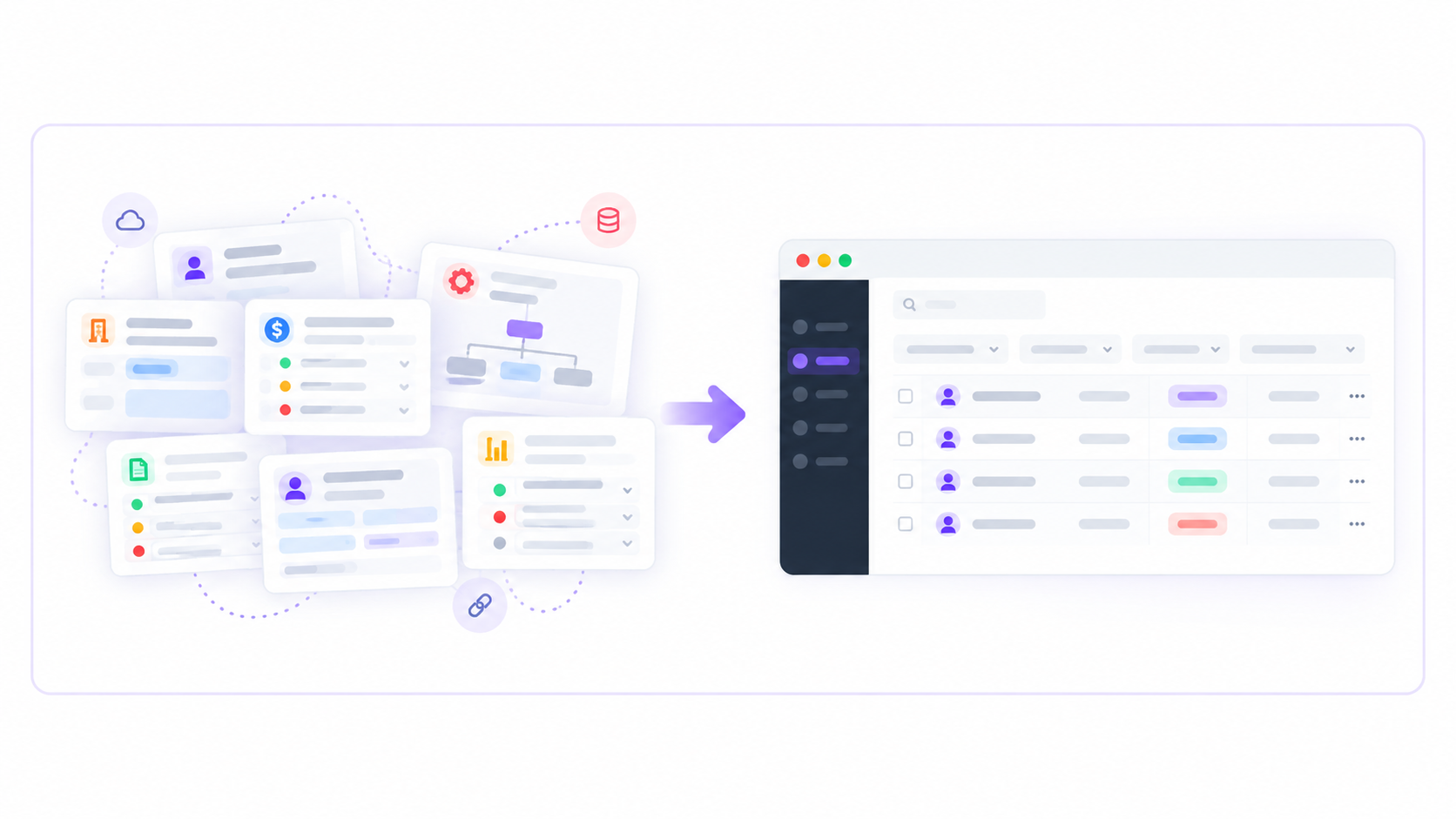
From Legacy Chaos to Clean CRM

Connect Marketing, Sales, and Customer Success

Align lifecycle stages, handoffs, lead qualification, and follow-up processes across the customer journey.
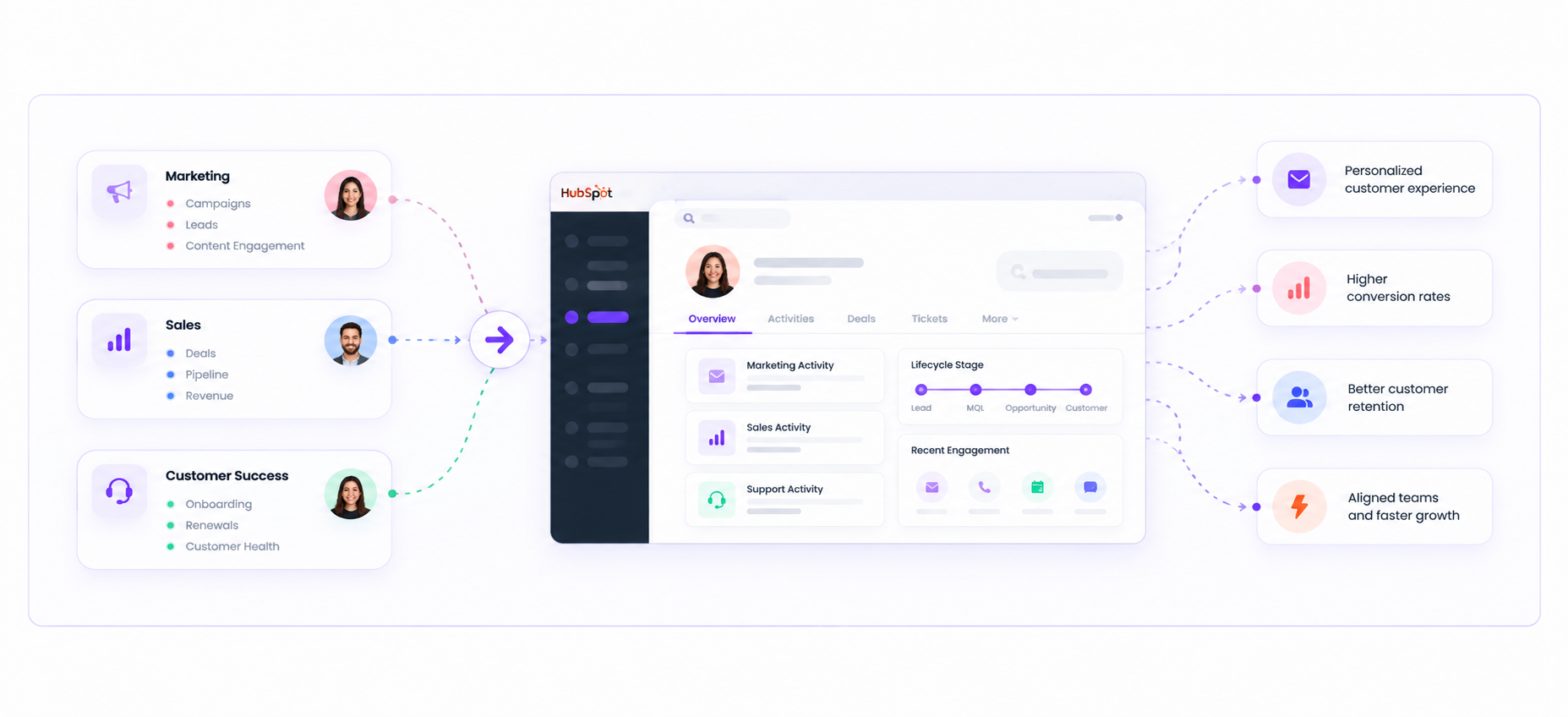
Unified Teams CRM Flow

Improve Revenue Visibility

Build reporting around pipeline movement, conversion, lifecycle performance, and the metrics that matter to your business.

From Fragmented Data to Revenue Growth

Create a CRM Foundation That Can Evolve

Configure HubSpot around your current operational requirements while leaving room for future teams, workflows, and integrations.
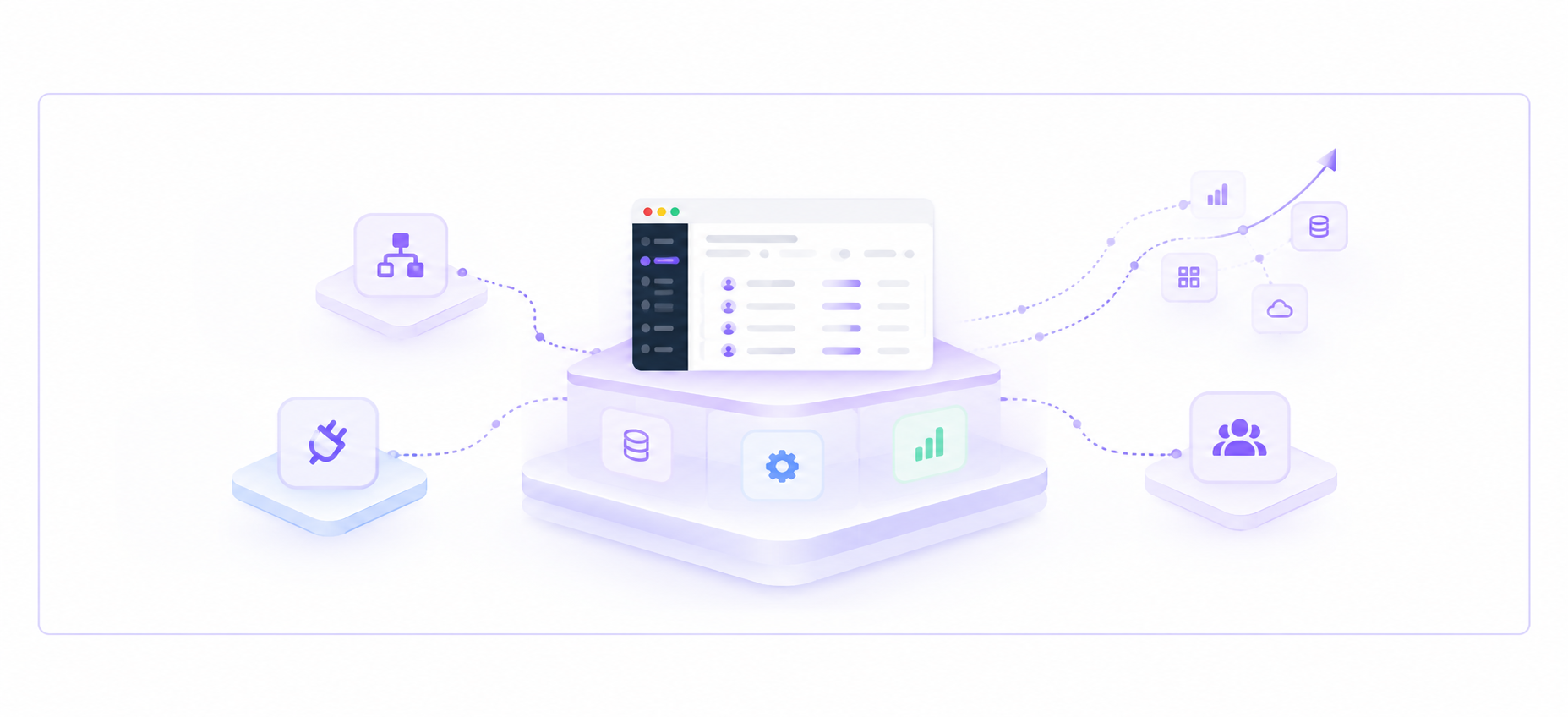
Layered CRM Platform Ecosystem

Salesforce to HubSpot Migration: Map the Architecture, Not Just the Records

Salesforce and HubSpot have different data models, customization capabilities, and automation frameworks. A successful migration begins by understanding how your current CRM works and designing the right target structure in HubSpot.

Salesforce Objects to HubSpot Objects

Map standard and custom Salesforce objects to the appropriate HubSpot objects, custom objects, or other suitable structures based on business requirements and subscription capabilities.

Salesforce Relationships and Associations

Assess lookup relationships, master-detail relationships, contact-account relationships, and other dependencies to determine how they should translate into HubSpot associations.

Custom Fields and Property Mapping

Map field types, dropdown values, required properties, formulas, and business-specific data definitions. Identify fields that need to be consolidated, transformed, or redesigned.

Salesforce Opportunities to HubSpot Deals

Map opportunity stages, amounts, close dates, owners, probability, and relevant associations to the appropriate HubSpot deal structure.

Salesforce Activities and Engagement History

Assess tasks, events, notes, emails, and other historical interactions to establish what can be migrated, how it should be associated, and what limitations apply.

Salesforce Automation to HubSpot Workflows

Identify the business logic behind Salesforce flows, Process Builder processes, legacy workflow rules, assignment rules, and other automation. 

Salesforce Reports to HubSpot Dashboards

Identify critical reports, field dependencies, filters, historical metrics, and attribution requirements. Recreate priority reporting based on the migrated data and agreed definitions.

What Data Can Be Migrated from Salesforce to HubSpot?

Every Salesforce environment is different. We define the migration scope around the records, relationships, and historical context your business needs rather than assuming every component can be transferred as-is.

Accounts and Contacts

Migrate company and customer records with essential details and ownership.
Preserve key relationships to maintain connected CRM records.

Leads and Lead Conversion Data

Transfer lead records, source details, and qualification information.
Map conversion data to the appropriate HubSpot records and processes.

Opportunities and Sales Pipelines

Migrate deals, pipeline stages, values, and close dates.
Preserve relevant company and contact associations.

Custom Objects and Related Records

Assess custom objects and business-specific records for migration.
Map them to HubSpot objects or suitable alternative structures.

Activities, Notes, and Historical Engagement

Transfer supported tasks, calls, emails, notes, and activities.
Prioritise historical engagement based on availability and business needs.

Users, Ownership, and Permissions

Map Salesforce users, record owners, and teams to HubSpot.
Align access requirements with HubSpot’s available permissions.


Salesforce to HubSpot: What Should You Migrate, Rebuild, or Retire?

Replicating Salesforce inside HubSpot can carry unnecessary complexity into your new CRM.
We assess each component to determine the right approach for the target environment.

Migrate What Matters

Transfer essential customer records, sales data, history, and business-critical relationships.

Rebuild for HubSpot

Redesign objects, workflows, integrations, and reports that don't translate directly.

Retire Redundant Components

Identify outdated fields, redundant workflows, and legacy components that can be safely removed from your new CRM setup.

Your Salesforce Integrations Don't Get Left Behind. They Get Reconnected.

A Salesforce migration involves more than moving CRM data. We assess connected platforms, integrations, APIs,
and data flows to determine what needs to be migrated, reconfigured, rebuilt, or retired for HubSpot.

How We Validate Your Salesforce to HubSpot Migration

A completed data transfer does not automatically mean a successful migration.
We validate the critical components of your new CRM against the requirements agreed during discovery.

Data Accuracy

Reconcile record counts, field values, owners, required properties, and identified migration exceptions.

Relationships and Associations

Verify account-contact-deal relationships, custom object associations, and other in-scope record dependencies.

Workflows and Pipelines

Test deal stages, automation triggers, assignments, notifications, and agreed business processes.

Reporting and Revenue Metrics

Validate priority dashboards, pipeline metrics, conversion calculations, and reporting definitions against agreed requirements.

Integrations and Data Flows

Test critical APIs, forms, middleware, and connected systems to confirm that expected data flows continue to work.

The Salesforce to HubSpot Migration Roadmap: Audit. Architect. Migrate. Launch.

Our four phase migration process combines technical assessment, data mapping, controlled execution, and operational readiness.

01. Audit & Discovery

Understand your Salesforce CRM before anything moves.

CRM Audit – Review objects, fields, records, custom code, integrations, and reporting dependencies.

Data Assessment – Identify duplicates, inconsistencies, data-quality issues, and migration risks.

Migration Scope – Define what moves, what gets rebuilt, and what can be retired.

02. Architecture & Preparation

Design the HubSpot environment and prepare your data for migration.

Data Mapping – Map Salesforce objects, properties, relationships, owners, and activities to HubSpot.

HubSpot Setup – Configure objects, properties, pipelines, lifecycle stages, and permissions.

Clean & Pilot – Clean approved data and run a pilot migration to validate mappings and associations.

03. Migration & Validation

Move the approved data and make sure the new CRM works as expected.

Production Migration – Transfer approved records using the appropriate migration method.

Integration & Workflow Rebuild – Reconfigure integrations and recreate scoped business logic in HubSpot.

Validation & Reconciliation – Verify records, relationships, workflows, integrations, and reports.

04. Launch & Transition

Move your team into a validated HubSpot environment with confidence.

Final Cutover – Complete the final migration and transition from Salesforce to HubSpot.

User Acceptance Testing – Validate key workflows, reports, and CRM processes with your team.

Enablement & Support – Train users, document the new setup, and resolve post-migration issues.

Your CRM Data Stays Protected Throughout the Migration

Your CRM contains customer, sales, and business-critical data. We incorporate data protection,
controlled access, and validation into the migration plan from discovery through post-launch transition.

Before Migration 01

Secure Access Before Data Moves
Define access permissions, data ownership, backups, and security requirements.

During Migration 02

Keep Data Transfers Controlled
Follow controlled transfer procedures with appropriate access controls and documentation.

During Testing 03

Validate Without Disrupting Salesforce
Test migrated records, relationships, and workflows before switching over.

Before Go-Live 04

Verify Data Before Your Team Switches Over
Reconcile records, resolve discrepancies, and confirm data integrity against acceptance criteria.

After Go-Live 05

Protect the Transition After Launch
Monitor performance, resolve migration issues, and support a smooth transition from Salesforce to HubSpot.

What Determines Your Salesforce to HubSpot Migration Timeline?

Every migration depends on your CRM complexity, data quality, and implementation requirements.
We assess these factors to define a realistic migration plan.

Step 1

Data Volume & History

Large datasets, historical activities, and complex record associations requiring careful transfer and validation.

Step 2

Custom Objects & Architecture

Specialized objects, property dependencies, and relationships that need precise mapping to HubSpot.

Step 3

Workflows & Integrations

Salesforce flows, Apex logic, third-party integrations, and business processes requiring reconstruction.

Step 4

Testing & Go-Live Readiness

Pilot migrations, data reconciliation, user acceptance testing, and stakeholder sign-off before launch.

Choose the Right Salesforce to HubSpot Migration Approach

The right delivery model depends on the complexity of your Salesforce setup, internal technical resources, and desired level of implementation support.

Self-Service Migration

Suitable for teams with straightforward data requirements, in-house technical expertise, and the resources to manage mapping, migration, and validation independently.

Guided Migration

For teams that can manage parts of the migration internally but need expert guidance on data mapping, CRM architecture, migration planning, and quality assurance.

Fully Managed Migration

For businesses with complex Salesforce implementations, custom objects, extensive automation, multiple integrations, or significant reporting dependencies that require end-to-end migration support.

Ready to Move from Salesforce to HubSpot?

Your next CRM should reflect where your business is going, not the complexity of the system you're leaving behind.

OneMetric helps you assess your Salesforce environment, plan your migration, redesign the right components, and transition to HubSpot with a structured approach to data quality and operational continuity.

Why Choose OneMetric for HubSpot Migration?

OneMetric approaches CRM migration as an architecture and operations project-not, just a data transfer.
We assess your existing environment, map your business requirements, and help build a HubSpot setup designed around your revenue operations.

Hubspot elite partner

HubSpot Elite Partner

Certified HubSpot Expertise
Expertise across CRM migrations, implementations, integrations, and RevOps, helping businesses transition to HubSpot with the right architecture and setup.
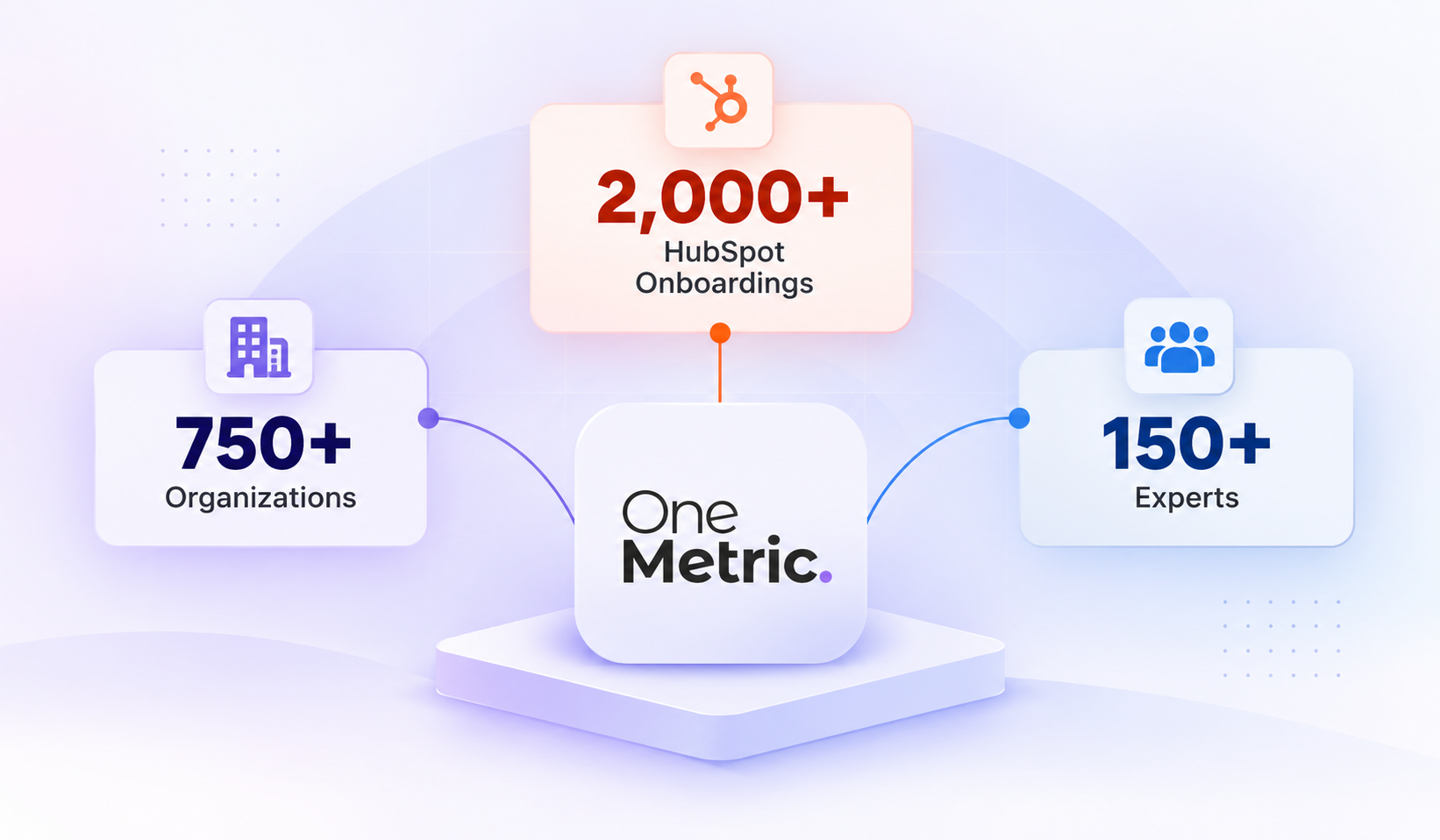
why one metric

Proven at Scale

Experience That Scales With You
Trusted by 750+ organizations with 2,000+ HubSpot onboardings, backed by 150+ HubSpot, RevOps, and DevOps experts.
one metric security

Enterprise Security

Security Built for Enterprise
SOC 2 Type II and ISO 27001 certified practices supporting secure, compliant, and reliable CRM migrations for enterprise environments.

Book a Meeting

Frequently Asked Questions About Salesforce to HubSpot Migration

The process starts with a Salesforce audit, followed by data mapping, HubSpot architecture design, data cleanup, pilot migration, production transfer, and validation. Workflows, integrations, and reporting are addressed according to the agreed migration scope.

The timeline depends on data volume, custom objects, automation complexity, integrations, historical data requirements, and testing. A migration assessment helps establish a realistic implementation schedule.

Depending on the source configuration and migration method, data may include accounts, contacts, leads, opportunities, activities, notes, custom fields, and supported relationships. Custom objects, historical records, and specialized data require individual assessment.

Custom object data may be migrated to HubSpot custom objects or another suitable structure, subject to object mapping, association requirements, subscription capabilities, and the selected migration method. Not every Salesforce object has a direct HubSpot equivalent.

Salesforce automation and Apex code cannot simply be transferred as native HubSpot workflows. The underlying business logic must be assessed and rebuilt using suitable HubSpot features, APIs, custom integrations, or alternative solutions where necessary.

Salesforce reports and dashboards generally need to be recreated in HubSpot or an appropriate reporting platform. The migration team should map the underlying fields, metrics, filters, and historical data requirements before rebuilding priority reports.

Relevant historical records can often be migrated, but the extent of preservation depends on data availability, relationships, field mappings, and destination-system capabilities. Historical field changes, audit history, activity records, and specialized objects should be evaluated separately.

The migration can be planned to minimize disruption. A completely interruption-free transition depends on integration architecture, synchronization requirements, data volume, and cutover strategy. The migration plan should define any data freeze, final synchronization, and transition requirements.

Pricing depends on the volume and complexity of data, custom objects, historical records, automation, integrations, reporting requirements, and implementation scope. OneMetric can estimate the effort after assessing your existing Salesforce environment.

Each integration must be assessed individually. Some may support HubSpot directly, while others require reconfiguration, replacement, middleware changes, or custom development. Critical data flows should be tested before go-live.

Training is recommended because HubSpot's interface, data model, workflows, and reporting differ from Salesforce. Enablement should cover the processes your team uses most, including contact management, deal management, automation, and reporting.

Relatable? We should definitely talk.

All that we’ll cover when we speak:

  • How to measure and multiply the ROI of your HubSpot investment
  • How can you integrate systems to eliminate data silos and make HubSpot the Single source of truth for your GTM teams
  • Your current GTM motions and future roadmap
  • Challenges that you face with your HubSpot
  • What would "wins" look like for you
Book a Meeting