

Tata Communications operates a large digital ecosystem supporting enterprise buyers, existing customers, partners, and global business units across multiple product lines and markets.
The ecosystem included nearly 3,000 pages spanning:
- product and solution experiences,
- campaign landing pages,
- gated resources,
- webinars,
- onboarding journeys,
- calculators and surveys,
- customer portals,
- and authenticated engagement environments.
As the platform evolved, customer engagement expectations became significantly more sophisticated.
Enterprise users no longer interacted with isolated marketing pages. They moved continuously between campaigns, onboarding flows, gated tools, educational resources, calculators, webinars, and authenticated customer experiences.
At the same time, Tata Communications needed to continue launching campaigns, testing engagement strategies, and expanding digital experiences while managing a large-scale migration and ongoing operational complexity.
What initially began as a CMS modernization initiative with us(OneMetric) quickly evolved into a broader engagement transformation.
The organization needed a system that could:
- preserve customer context across interactions,
- make customer journeys visible after login,
- support rapid campaign experimentation,
- and scale operationally across a large enterprise ecosystem.
As the ecosystem grew, Tata Communications needed a more connected way to manage customer engagement across campaigns, onboarding flows, tools, and authenticated experiences while continuing to support rapid delivery across teams.
Problem
Customer Engagement Was Disconnected Across Experiences
Enterprise customers moved fluidly between:
- campaign pages,
- onboarding flows,
- calculators,
- webinars,
- surveys,
- gated resources,
- customer tools,
- and authenticated environments.
However, those experiences were not fully connected operationally.
Users often encountered fragmented continuity between interactions. Context was not consistently preserved, and customers frequently had to restart workflows or navigate disconnected systems when moving between experiences.
The ecosystem lacked persistence across engagement touchpoints.
The Business Could Not Fully Understand the Customer Journey
One of the biggest limitations was visibility into engagement progression.
Once a customer entered the ecosystem, Tata Communications could not consistently understand:
- which services the customer explored,
- what surveys they completed,
- which calculators they interacted with,
- what onboarding paths they followed,
- or how engagement evolved across sessions and touchpoints.
The organization wanted both the customer and Tata Communications to see the same engagement journey, including:
- recently visited blogs,
- services explored,
- surveys accessed,
- and products being evaluated.
Authentication became the foundation for maintaining continuity across customer interactions, allowing users to continue journeys across sessions instead of starting over each time they returned.
Campaign Experimentation Was Too Slow
At the same time, marketing teams needed greater speed.
Enterprise campaigns increasingly depended on:
- rapid landing page creation,
- A/B testing,
- fast campaign iteration,
- and continuous optimization of engagement experiences.
However, the existing operating model slowed experimentation.
Launching new pages, testing variants, and refining campaigns often required too much operational coordination and engineering involvement.
That created a compounding problem:
- testing cycles slowed down,
- experimentation became harder to sustain,
- and optimization velocity decreased across campaigns.
For a large enterprise ecosystem, slower experimentation directly affects growth and engagement performance over time.
Scaling the Ecosystem Increased Operational Complexity
The migration itself involved nearly 3,000 pages across multiple business units and experience types.
Different teams managed different products, resources, and engagement flows simultaneously.
As the ecosystem expanded:
- publishing operations became harder to coordinate,
- governance became more difficult to maintain,
- and operational overhead continued increasing.
The organization needed a system capable of supporting:
- large-scale migration,
- rapid campaign delivery,
- connected customer journeys,
- and long-term operational scalability together.
Solution
Building a Connected Enterprise Engagement Ecosystem
The transformation focused on rebuilding how customer engagement and digital delivery operated across the organization.
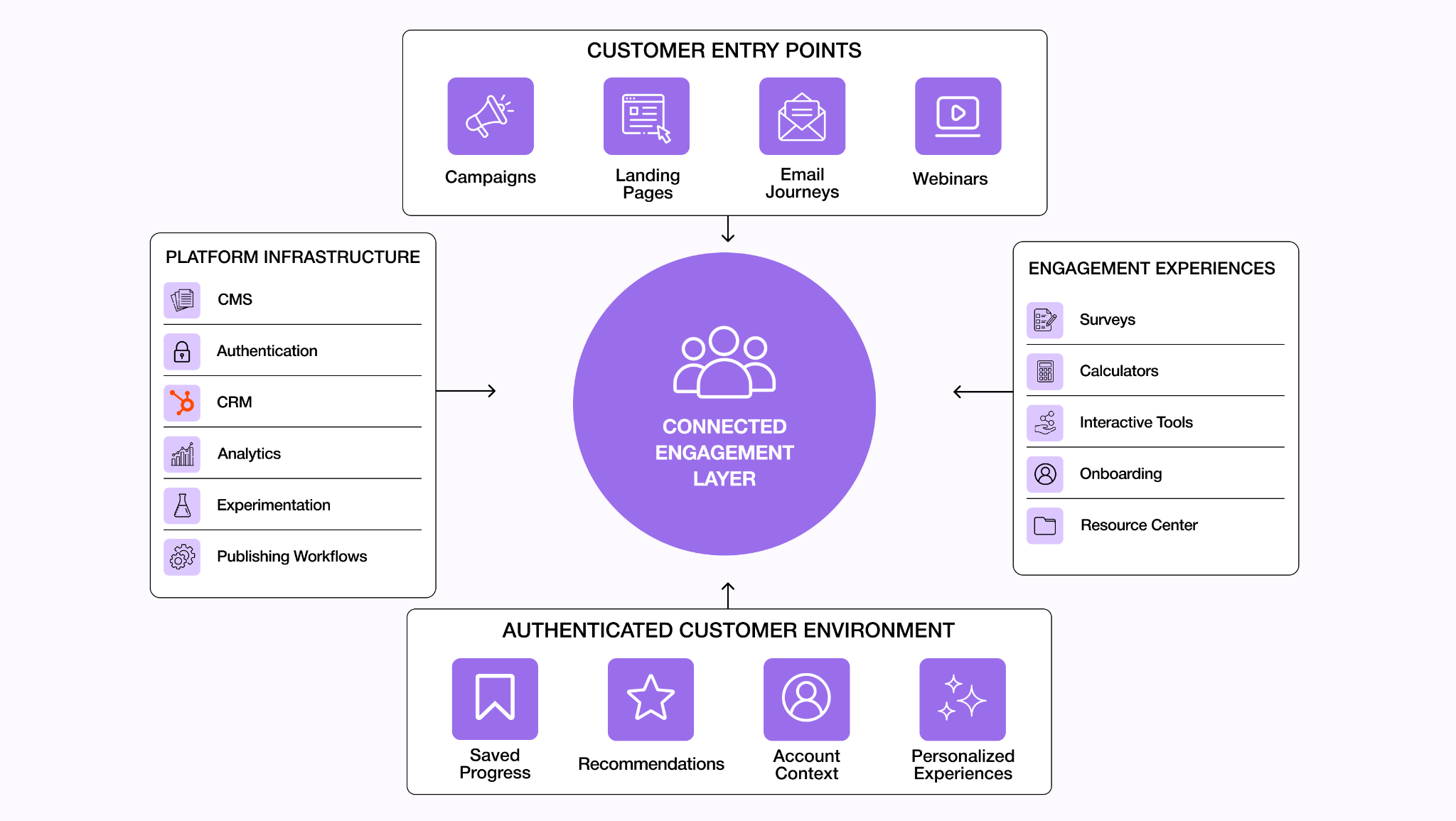
Rather than approaching the initiative as a traditional CMS migration, Tata Communications treated it as a broader operational redesign focused on:
- customer journey continuity,
- engagement visibility,
- rapid experimentation,
- and scalable publishing operations.
The new ecosystem enabled customers to move more seamlessly between experiences while preserving continuity across interactions.
Turning Authentication Into Customer Journey Continuity
One of the most important parts of the transformation was redefining what login experiences were meant to accomplish.
Authentication became more than a standalone access mechanism.
It became the foundation for maintaining continuity across customer engagement journeys.
Once users entered authenticated environments, the platform could preserve context across:
- calculators,
- onboarding flows,
- webinars,
- gated resources,
- surveys,
- customer tools,
- and account-level engagement experiences.
This significantly changed how engagement operated across the ecosystem.
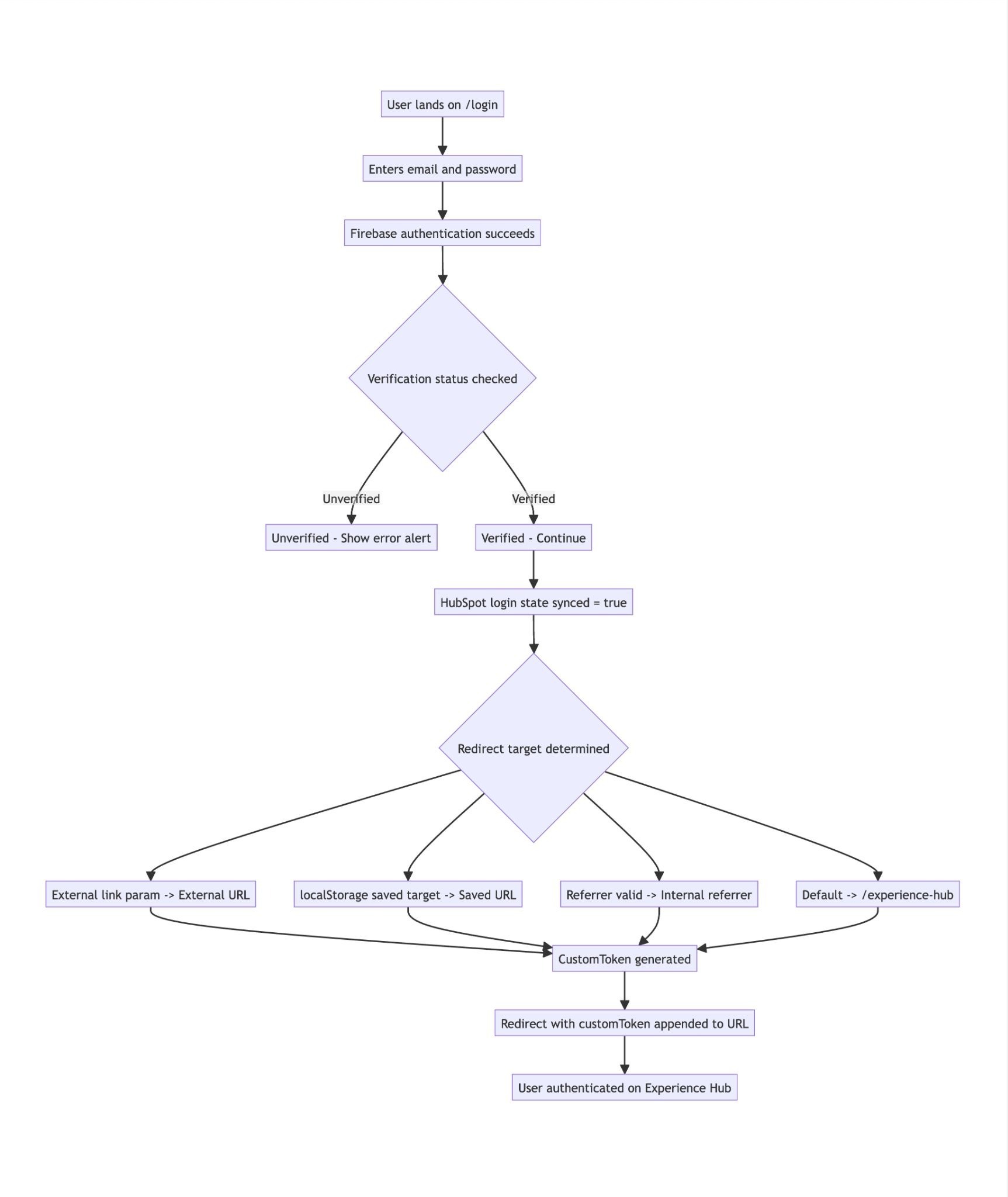
Customers no longer had to repeatedly restart disconnected workflows. Instead, they could continue journeys, revisit previous interactions, and move more seamlessly between experiences.
The login infrastructure also supported continuity across marketing campaigns and gated tools. Users entering through campaign-specific experiences could move from:
campaign → registration → login → authenticated tool access
without losing journey context.
That continuity became a core part of the engagement model.
Creating a Shared View of the Customer Journey
A major transformation involved making engagement history visible to both the customer and the business.
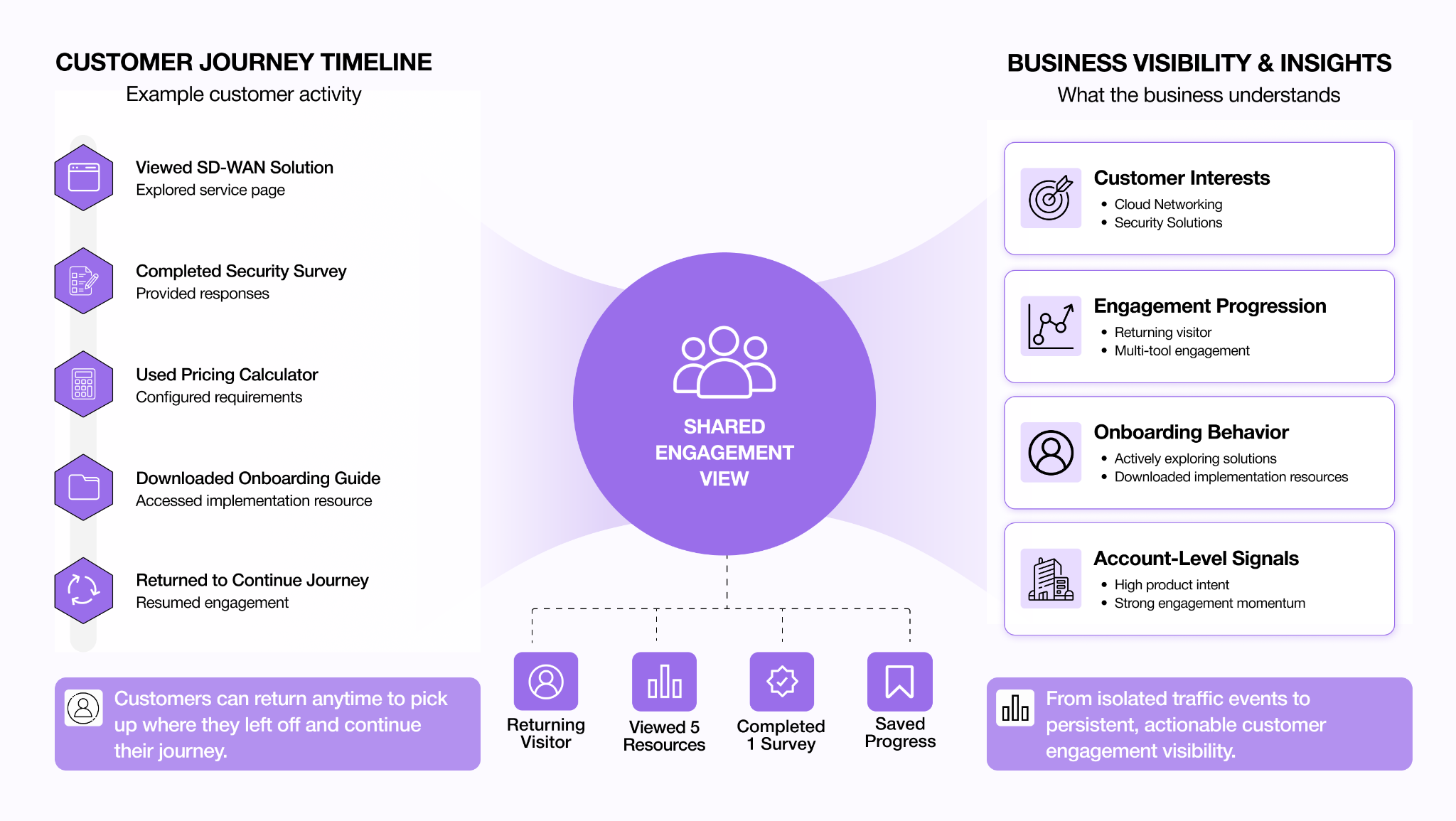
Once authenticated, the platform could maintain visibility into:
- which services users explored,
- what surveys they completed,
- what tools or calculators they used,
- which resources they accessed,
- and how their engagement evolved over time.
This created a shared engagement view between customer and company.
Customers could return to their journeys and continue interacting with relevant resources and tools.
At the same time, Tata Communications gained a clearer understanding of:
- customer interests,
- engagement progression,
- onboarding behavior,
- and account-level interaction patterns.
The ecosystem moved from isolated traffic events toward persistent customer engagement visibility.
Supporting More Contextual Engagement Experiences
The authenticated environment also enabled more contextual engagement pathways.
Once users logged in, the platform could surface recommendations based on:
- previously viewed resources,
- engagement history,
- lifecycle stage,
- product interest,
- account-level intent signals,
- and CRM-associated data.
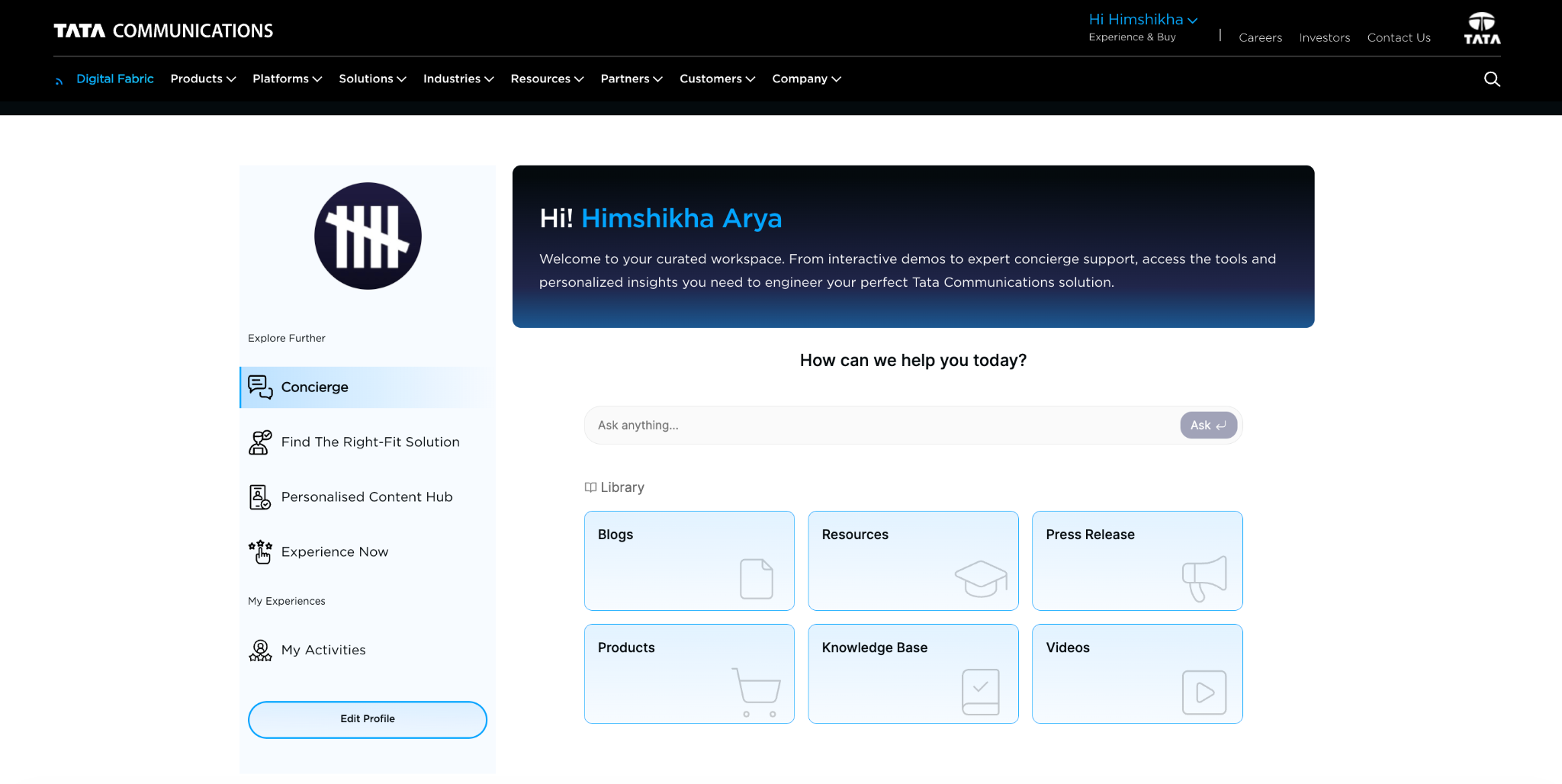
For example:
- prospects researching networking solutions could receive related webinars and implementation guides,
- existing customers could access support resources and product-specific materials,
- high-intent accounts could move into more targeted engagement pathways connected to active buying signals.
This transformed gated content from a static download experience into a more connected engagement model.
Rebuilding the Delivery Model for Scale and Speed
The transformation also focused heavily on operational scalability.
To support a migration involving nearly 3,000 pages while continuing to launch campaigns and new engagement experiences, Tata Communications needed a delivery model capable of moving significantly faster.
|
Before |
After |
|
Publishing depended heavily on developers |
Content teams could manage more updates through structured CMS controls |
|
Small changes moved slowly through the workflow |
Campaigns and page updates could move faster |
|
Page structures varied across the site |
Publishing became more consistent and easier to govern |
|
Resource management required repetitive manual effort |
Dynamic content could be managed through centralized datasets |
|
Gated content operated separately from demand workflows |
ABM journeys could be supported through structured content access and 6sense connected targeting |
|
Testing and iteration were harder to sustain |
Teams could launch, test, and refine content more quickly |
|
Growth increased maintenance overhead |
The publishing model scaled more efficiently across teams |
The platform introduced:
- reusable publishing systems,
- structured page creation workflows,
- scalable content operations,
- and centralized governance controls.
This changed day-to-day publishing operations in a practical way.
Instead of treating updates and campaigns as one-off implementation efforts, teams gained repeatable systems for creating and managing pages more independently.
That reduced operational dependency on engineering teams while improving responsiveness across marketing and content operations.
Enabling Faster Campaign Experimentation
A critical requirement of the new ecosystem was experimentation velocity.
The organization needed to launch campaigns faster, test engagement pathways more efficiently, and iterate continuously across customer experiences.
The new operating model made it easier for teams to:
- create campaign pages quickly,
- launch A/B test variants,
- refine messaging and layouts,
- and optimize engagement experiences through shorter iteration cycles.
This became especially important across a large enterprise ecosystem where:
- multiple campaigns were running simultaneously,
- engagement journeys evolved rapidly,
- and optimization speed directly impacted performance.
The platform enabled teams to test, learn, and improve more continuously without slowing down operational delivery.
Balancing Experimentation, Governance, and Scalability
One of the most important aspects of the transformation was balancing operational agility with enterprise governance.
The platform needed to:
- support rapid experimentation,
- allow faster page creation,
- preserve customer continuity,
- and scale across thousands of pages,
without recreating fragmentation across the ecosystem.
The resulting operational model balanced:
- flexibility,
- scalability,
- governance,
- and long-term maintainability across teams.
This allowed Tata Communications to move faster operationally while maintaining consistency across a large and evolving digital environment.
Outcome
Customer Engagement Became Continuous
The ecosystem evolved from disconnected interactions into connected engagement journeys.
Customers could move more seamlessly across:
- campaigns,
- onboarding experiences,
- calculators,
- webinars,
- gated resources,
- customer tools,
- and authenticated environments.
Instead of restarting workflows repeatedly, users could continue interactions across sessions while maintaining stronger continuity throughout the journey.
The engagement experience became more persistent, contextual, and customer-centric.
The Business Gained Persistent Visibility Into Customer Behavior
One of the most important outcomes was engagement visibility.
Tata Communications could now better understand:
- what customers explored,
- which tools or calculators they used,
- how onboarding journeys progressed,
- which surveys they completed,
- and how engagement evolved over time.
This created a stronger understanding of customer intent and lifecycle progression across the ecosystem.
The platform transformed engagement into a shared and trackable journey rather than isolated interactions.
Campaign Optimization Became Faster
The new operating model significantly improved experimentation speed across marketing and engagement teams.
Teams could:
- launch campaigns more quickly,
- test variants faster,
- iterate on engagement flows more efficiently,
- and refine customer experiences through shorter optimization cycles.
This reduced the operational friction traditionally associated with enterprise-scale experimentation and helped create a more responsive engagement operation overall.
Large-Scale Delivery Became More Sustainable
The migration of nearly 3,000 pages became significantly more manageable because the platform supported:
- repeatable page creation,
- reusable publishing systems,
- scalable workflows,
- and coordinated operational governance.
Growth no longer required proportionally increasing operational complexity across teams and business units.
The ecosystem became easier to expand, optimize, and maintain over time.